


Subtotal $0.00
Clean Room Partition for Pharma Facilities in India : GMP-Compliant Design, Installation, and Consulting
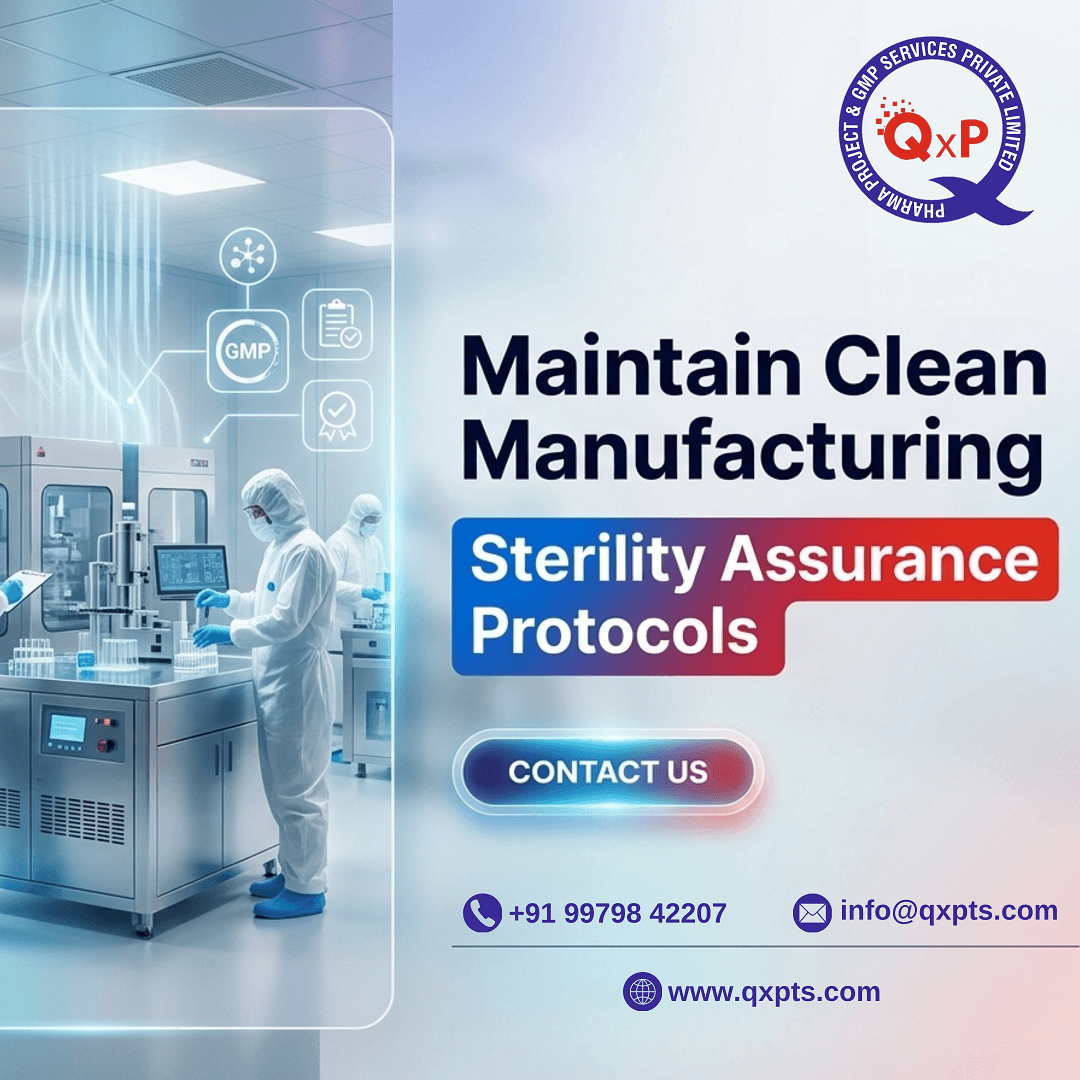
Sterility Strategies to Prevent Pharma Contamination start with proper cleanroom partition design. Clean Room Partition systems define sterility, air classification, and audit outcomes in pharma facilities. QXP Pharma Project Consultant & GMP Service Pvt. Ltd. delivers end-to-end services across India, including layout planning, material selection, installation, and validation. These partitions are not just walls—they establish Grade A–D zones, control HVAC pressure cascades, and ensure WHO GMP compliance, helping manufacturers avoid audit failures, contamination risks, and costly post-installation rework.
Clean Room Partition Consultant India — What GMP-Compliant Design Actually Requires
Most pharma companies in India underestimate what a GMP-compliant Clean Room Partition design involves. Schedule M of the Drugs and Cosmetics Act requires partition surfaces to be smooth, non-shedding, and easy to clean. Additionally, surfaces must resist disinfectants used in classified areas. WHO Technical Report Series No. 961 Annex 6 adds another requirement. Wall-to-floor and wall-to-ceiling junctions must be coved — not right-angled — to prevent microbial build-up. A Clean Room Partition consultant India from QXP Pharma Project Consultant & GMP Service Pvt. Ltd. checks all these points at the design stage. Consequently, your build passes first-time inspection without multiple CDSCO-flagged corrections.
Material choice is equally important. GMP compliance India-grade partitions use modular aluminium-framed panels. Skins are powder-coated steel, PPGI boards, or HPL laminate. All are rated for repeated IPA and sodium hypochlorite wipe-down cycles. Furthermore, panel joints need food-grade silicone sealing to block particle ingress at seams. For aseptic zones in Pune or Ahmedabad formulation plants, QXP specifies panels with a surface roughness of Ra ≤ 0.8 µm. This spec directly satisfies Schedule M New GMP rules for sterile manufacturing areas. This depth of guidance separates a genuine pharma regulatory services expert from a standard civil contractor.
According to insights featured on Nasdaq, pharmaceutical companies are increasingly prioritizing contamination control and compliance-driven manufacturing strategies.
Hire Clean Room Partition Consultant for Pharma Company in India — Scope, Process, and Deliverables
When pharma companies hire a Clean Room Partition consultant for a pharma company in India, they need more than a material list. They need a clear, step-by-step process. QXP Pharma Project Consultant & GMP Service Pvt. Ltd. uses a four-stage method. First, a facility audit checks layouts against Schedule M and WHO GMP zone rules. Second, a design brief records partition types, panel grades, door specs, and pass-box positions. Third, GMP-qualified engineers supervise installation on-site. Fourth, the team produces DQ, IQ, and OQ documentation for drug manufacturing compliance submissions to WHO or CDSCO.
For pharma units in Nagpur or Jaipur preparing for their first CDSCO GMP licence, this process is especially useful. Many facilities build clean rooms from civil drawings. They then find that partition specs do not match Schedule M during the pre-inspection audit. As a result, they face 3 to 6 months of delays for fixes before licencing can proceed. QXP‘s front-loaded design process removes this risk. All deliverables arrive in GMP documentation format — ready to submit as part of your GMP documentation support file with CDSCO or WHO auditors.
GMP Audit Preparation — How Inspectors Evaluate Clean Room Partitions
During a GMP audit preparation India review, inspectors check partitions against three main points. First, surface integrity — no cracks, chips, or open joints that could hold contamination. Second, zone alignment — partitions must physically separate Grade C and Grade D areas with no uncontrolled air gaps. Third, documentation — DQ, IQ, and OQ certificates must be on file for aseptic manufacturing inspections. QXP Pharma Project Consultant & GMP Service Pvt. Ltd. prepares clients for all three points. The process includes a pre-audit walkthrough and a punch-list fix session before the formal inspection date.
Insights from Moneycontrol highlight that pharma companies are strengthening quality systems and sterility practices to meet rising regulatory expectations.
Clean Room Partition Services India — Cluster-Specific Compliance for Gujarat, Maharashtra, and Hyderabad
Clean Room Partition services India-wide must match the regulatory demands of each pharma cluster. In Gujarat‘s API belt — covering Ahmedabad, Surat, and Vadodara — facilities face WHO pre-qualification inspections for API export. These reviews check clean room separation between API synthesis and packaging zones under WHO TRS 961 Annex 2. In Maharashtra‘s formulation cluster — from Pune to Mumbai — USFDA 21 CFR Part 211 and EU GMP Annex 1 drive partition specs for sterile injectable and ophthalmic plants. QXP Pharma Project Consultant & GMP Service Pvt. Ltd. has worked across both frameworks. Clients in these clusters gain a direct advantage during inspections.
International Expansion — GMP Partition Consulting Beyond India
For the Hyderabad bulk drug corridor, the focus is often on Schedule M New compliance for oral solid dosage units. Partition specs for dispensing, granulation, and compression areas differ a lot from those for sterile zones. QXP also supports pharma companies expanding into export markets. The team’s pharma design and engineering services in the UAE apply the same GMP partition expertise to Gulf region facilities. This makes QXP a single consulting partner for companies operating in India and abroad. Furthermore, this cross-border knowledge adds regulatory value that most local consultants cannot offer.
Best Pharma Clean Room Partition Consultant for Drug Manufacturer India — Why Regulatory Experience Matters
Choosing the best pharma compliance consultant for drug manufacturer India means judging regulatory depth — not just construction skill. A GMP-experienced consultant knows how ICH Q9 risk rules apply to zone decisions. They know a misplaced pass-box between Grade B and Grade C creates a pressure failure during WHO inspection. Moreover, door sweep gaps, interlock problems, and open partition seams are all CDSCO-citable findings. Each one can delay your manufacturing licence. QXP Pharma Project Consultant & GMP Service Pvt. Ltd. treats every partition project as a regulatory task. Consequently, clients get a facility that is structurally complete and inspection-ready at the same time.
Pharma startup founders in Jaipur, Nagpur, and Mumbai often ask whether they need a pharma licence consultant India separately from their clean room contractor. The answer is yes. Ideally, both roles work together from the design phase. QXP Pharma Project Consultant & GMP Service Pvt. Ltd. combines partition design, GMP documentation, and licence preparation under one scope. Additionally, for companies applying for WHO GMP certification, the team’s pharma clean room partition consulting in India has delivered successful audit results across pan-India facilities — from greenfield builds to upgrades at existing plants.
WHO GMP Certification India — How Clean Room Partitions Decide Inspection Results
Every WHO GMP certification India inspection includes a walkthrough of classified areas. Inspectors treat clean room partitions as a primary check — not a background detail. QXP Pharma Project Consultant & GMP Service Pvt. Ltd. prepares WHO audit candidates through a structured pharma audit preparation process. It covers partition surface checks, pressure mapping, and documentation review — all done before the WHO team arrives.
For companies in Gujarat, Maharashtra, and Hyderabad targeting export markets, WHO GMP certification is a business priority. A failed partition check means a failed WHO audit. That means lost export contracts and delayed income. Therefore, a qualified Clean Room Partition consultant India delivers direct return through higher audit pass rates and faster time-to-market. QXP clients across pan-India pharma hubs have avoided first-attempt audit failures by engaging the team at the design stage. To start your project, reach the QXP consulting team and submit your facility brief for an initial review.
Frequently Asked Questions
1. What GMP standards govern Clean Room Partition design for pharma facilities in India?
- Clean Room Partition design in India must meet Schedule M of the Drugs and Cosmetics Act and WHO TRS 961 Annex 6 for sterile manufacturing. ISO 14644-1 covers cleanroom classification. For export-focused facilities, EU GMP Annex 1 or USFDA 21 CFR Part 211 also apply. Each standard sets rules on surface smoothness, junction coving, and zone separation. Partition systems must meet all of these to pass inspection.
2. How do I hire a Clean Room Partition consultant for my pharma company in Gujarat or Maharashtra?
- To hire a Clean Room Partition consultant for a pharma company in Gujarat or Maharashtra, look for firms with real GMP audit experience — not just civil construction records. QXP Pharma Project Consultant & GMP Service Pvt. Ltd. covers both the Gujarat API clusters and the Maharashtra formulation belt. The team provides design briefs, material specs, on-site supervision, and full qualification documents under one scope. Contact the team at QXP Pharma Consulting to begin with a facility review.
3. Clean Room Partition ke liye GMP audit mein inspector kya kya check karta hai?
- GMP audit ke dauran inspector Clean Room Partition mein teen cheezein check karta hai. Pehla, surface integrity — koi crack ya open joint nahi hona chahiye. Doosra, zone alignment — Grade B, C, D zones physically alag hone chahiye. Teesra, DQ, IQ, OQ documentation — partition ke liye full qualification records hone chahiye. India mein CDSCO aur WHO dono inspectors yahi criteria follow karte hain. Isliye design phase mein hi GMP-experienced consultant engage karna zaroori hai.
4. What is the difference between a modular Clean Room Partition and a standard wall in a GMP pharma facility?
- A modular Clean Room Partition uses aluminium-framed panels with GMP-grade skins — powder-coated steel or HPL laminate — sealed with food-grade silicone at every joint. A standard plastered wall cannot reach the surface smoothness of Ra ≤ 0.8 µm needed for aseptic zones. Furthermore, modular panels allow zone reconfiguration without full demolition. For WHO GMP certification India inspections, modular partition systems are also easier to qualify through DQ and IQ protocols.
5. Meri pharma company Hyderabad mein hai — kya QXP wahan Clean Room Partition consulting deta hai?
- Haan. QXP Pharma Project Consultant & GMP Service Pvt. Ltd. pan-India service provide karta hai — jisme Hyderabad bulk drug corridor bhi shaamil hai. Schedule M New compliance aur WHO TRS 961 ke hisaab se partition design, material spec, aur audit documentation sab taiyaar kiya jaata hai. Furthermore, installation ke dauran on-site supervision bhi milti hai. Project brief early design stage mein submit karein — taaki baad mein costly rework se bacha jaa sake.
6. How long does a GMP-compliant Clean Room Partition project take for a pharma unit in India?
- A standard GMP-compliant Clean Room Partition project in India takes 8 to 16 weeks from design sign-off to installation finish. Timeline depends on facility size, zone count, and whether the work is greenfield or a retrofit. Additionally, DQ, IQ, and OQ qualification documents add 3 to 4 weeks after installation. Gujarat and Maharashtra facilities chasing WHO GMP certification India should build this timeline into their audit scheduling plan.
7. WHO GMP certification ke liye Clean Room Partition ki qualification documentation kaise taiyaar karein?
- WHO GMP certification ke liye Clean Room Partition ki qualification mein teen documents chahiye — Design Qualification (DQ), Installation Qualification (IQ), aur Operational Qualification (OQ). DQ mein material specs aur zone classification rationale hoti hai. IQ mein as-built verification hoti hai. OQ mein pressure differential aur particle count data hota hai. India ke kisi bhi state mein — Gujarat, Maharashtra, ya Rajasthan — yeh documents WHO inspectors ko aseptic manufacturing facilities ke liye submit karne compulsory hain.
