


Subtotal $0.00
What Documents Are Required for Pharma Product Development?
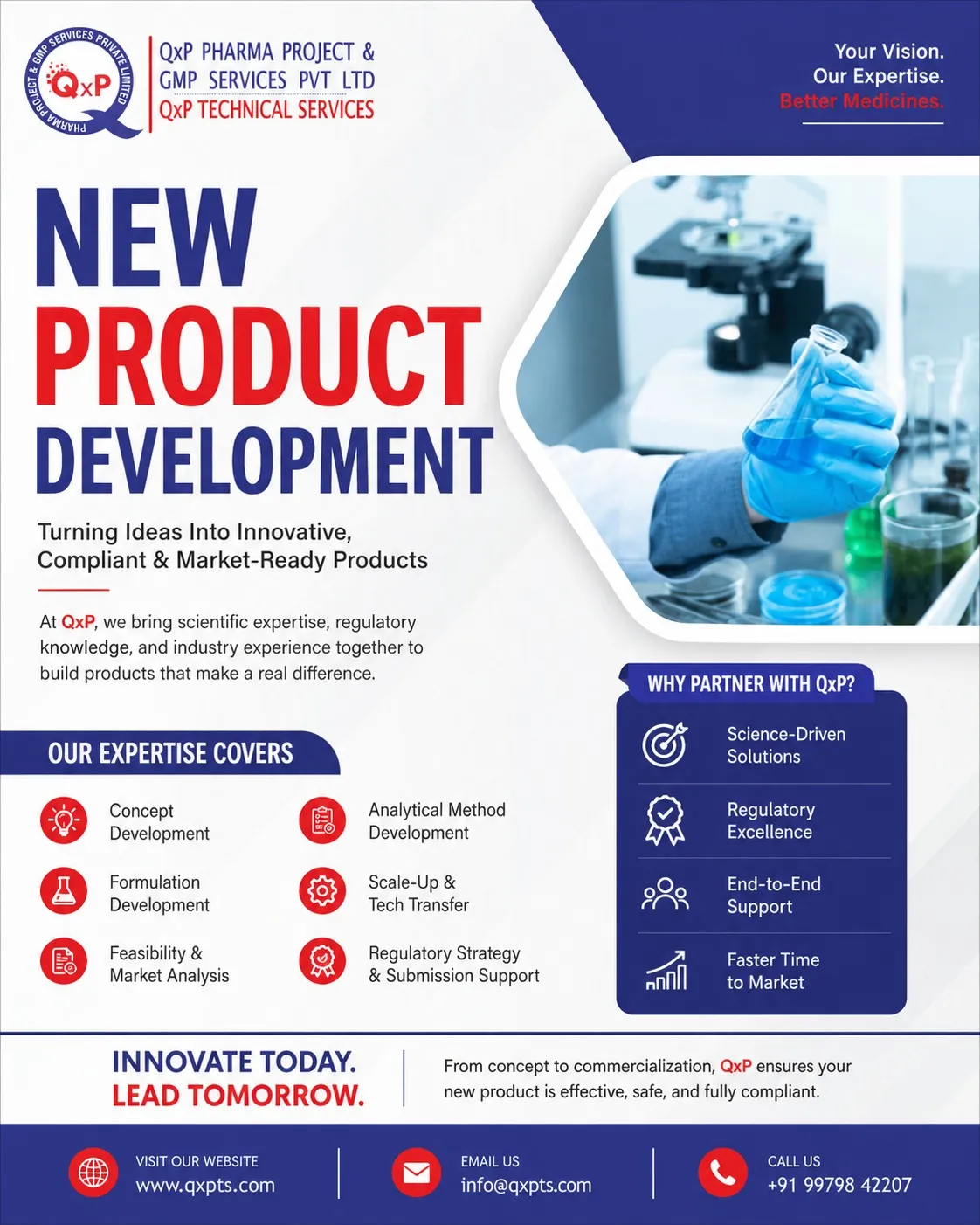
Pharma product development requires essential documents covering formulation, quality, regulatory, and manufacturing requirements. Key documents include product development reports, formulation records, analytical method reports, stability study protocols, specifications, batch manufacturing records, risk assessments, validation documents, and GMP compliance records. Following the New Product Development Procedure For Pharma helps ensure regulatory readiness, consistent quality, and smooth manufacturing. QxP Pharma Project & GMP Services supports pharma companies with complete documentation and GMP-focused development guidance.
New Product Development Procedure For Pharma: A Practical Consultant’s Guide
Launching a new pharmaceutical product in India is rarely just a formulation problem — it’s a facility, documentation, and regulatory-sequencing problem wearing a lab coat. Get the new product development procedure for pharma wrong at the planning stage, and you’ll spend the next eight months firefighting stability failures, layout mismatches, or a Schedule M query that could have been avoided on day one. QxP Pharma Project & GMP Services, working out of Ahmedabad since 2018, has walked this path with 300+ turnkey and GMP compliance projects across India, and this article lays out how a structured NPD procedure actually works on the ground — not the textbook version, the shop-floor version.
Why Choose QxP Pharma Project & GMP Services for New Product Development Procedure For Pharma
Yes, we provide end-to-end NPD support that starts before your architect draws the first wall and continues until your first commercial batch clears QA release. The reason this matters is simple: most product development delays in Indian pharma units don’t come from chemistry — they come from a facility that wasn’t designed for the product category in the first place (wrong airflow for a beta-lactam block, undersized stability chambers, or a layout that can’t support a turnkey pharma plant setup at scale later).
Our team is led by Mr. Pankaj Sojitra, Lead Consultant with 22+ years in pharma turnkey projects, and Mr. Vijay Patel, our Senior GMP & Regulatory Expert with 18 years of hands-on compliance experience. Between them, they’ve sat across the table from CDSCO auditors, WHO-GMP assessors, and state FDA inspectors in Gujarat, Maharashtra, and half a dozen other states — which is a different kind of knowledge than reading the guideline document. We follow ISO 9001:2015 aligned internal processes and are active contributors to IPA (Indian Pharmaceutical Association) discussions on CDSCO and WHO-GMP implementation, which keeps our advice current rather than five years stale.
Our New Product Development Procedure Consulting Capabilities
The best NPD consulting doesn’t start with construction — it starts with a feasibility study that maps your product’s technical requirements against a realistic facility and cost plan. Our capabilities cover:
- Product-to-facility mapping: matching dosage form (oral solid, liquid, injectable, ointment) to the correct clean room design consultant India-grade classification
- Process flow and material flow design to avoid cross-contamination risk, especially for beta-lactam, hormonal, or cytotoxic product lines
- WHO GMP facility layout planning covering airlocks, gowning sequences, and utility routing
- Equipment selection and vendor qualification support
- Pharmaceutical validation services — process validation, cleaning validation, and analytical method validation protocols
- Documentation architecture: SOPs, BMRs, BPRs, and validation master plans built to survive an actual audit, not just look good in a binder
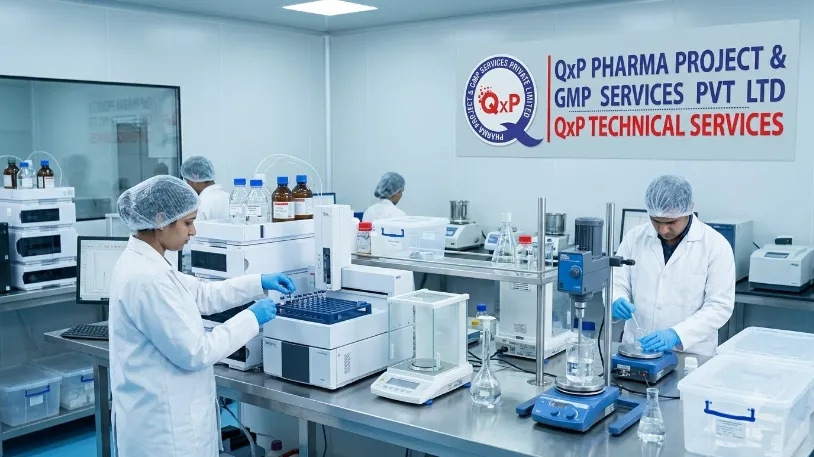
We’ve supported founders in Mumbai, Hyderabad, and Surat who came to us with a formulation and a term sheet but no real sense of what a compliant facility for that specific product would cost or take to build. That gap — between “we have a formula” and “we have a licensable plant” — is where most of our NPD engagements begin.
Navigating Regulatory Compliance & GMP Standards
Here’s how QxP Pharma Project & GMP Services approaches compliance: we treat CDSCO and Schedule M requirements as design inputs, not a checklist to satisfy after the plant is already built. Revised Schedule M compliance consultant requirements — covering quality management systems, qualification and validation, and product-specific manufacturing requirements — need to be baked into your facility drawings from the start, because retrofitting a non-compliant layout is almost always more expensive than building it right the first time.
Our CDSCO approval consultant support covers manufacturing license applications, product permission dossiers, and pre-audit readiness reviews. We also align facility design with WHO GMP guidelines where export markets (Africa, CIS countries, Southeast Asia) are part of the business plan, since a facility built only to domestic Schedule M standards often needs costly rework for WHO-GMP certification later. Founders in Indore and Chandigarh setting up export-focused units have specifically asked us to design for WHO-GMP from day one rather than retrofit — it’s the smarter sequencing.
If you want a starting point before committing to a full engagement, our Free GMP Gap Assessment Checklist is a useful first step to see where your current plan or facility stands against current regulatory expectations.
Local Consultants vs QxP Pharma Project & GMP Services
Founders in Pune, Jaipur, and Chennai often ask how a specialised pharma turnkey project consultant compares to hiring a local architect plus a separate regulatory freelancer. Here’s a practical comparison based on patterns we’ve seen across 300+ projects:
| Parameter | Local / Fragmented Consultants | QxP Pharma Project & GMP Services |
|---|---|---|
| Facility Design + Regulatory Alignment | Handled separately, often causing rework | Integrated from feasibility stage onward |
| Schedule M / CDSCO Familiarity | Varies by individual consultant | 18+ years of direct regulatory engagement |
| Validation Documentation | Often outsourced separately | In-house validation services included |
| Cost Transparency | Multiple invoices, unclear scope overlap | Single scope, phase-wise costing |
| Track Record | Project-specific, limited history | 300+ delivered turnkey and GMP projects |
Step-by-Step Process – How We Deliver New Product Development Procedure
- Feasibility and product assessment – reviewing your formulation, target markets, and batch scale to define facility requirements
- Layout and GMP plant design consultant India-level drawings – airflow, material flow, personnel flow, and utility planning
- Cost and timeline mapping – realistic pharma manufacturing unit setup cost India estimates broken down by civil, HVAC, equipment, and validation
- Vendor coordination and equipment qualification – DQ, IQ, OQ support for critical equipment
- Documentation build-out – SOPs, validation master plan, BMR/BPR templates
- Regulatory filing support – CDSCO/state FDA license applications and query resolution
- Pre-commercial audit readiness – mock audits before your actual regulatory inspection
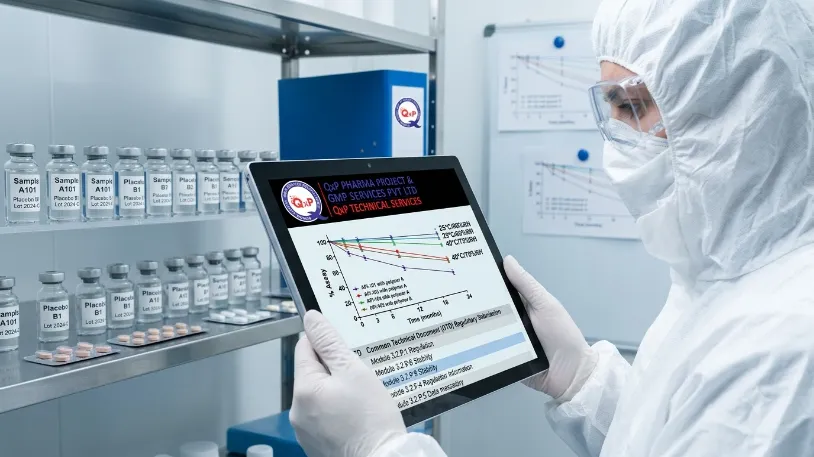
This sequence has worked consistently for clients in Bangalore, Kolkata, and Vadodara building both domestic and export-oriented facilities, largely because it front-loads the decisions that are expensive to reverse later.
Real Client Case Study
A mid-sized formulation company near Ahmedabad was planning to launch an oral solid dosage product line. Their first layout, designed by a general industrial architect, failed an internal GMP readiness review. Two core issues stood out. The airlock sequencing was inadequate. The return-air design also risked cross-contamination between two product categories.
Our team, led by Mr. Vijay Patel, reworked the facility layout. We followed a proper WHO GMP facility layout planning approach. We also redesigned the HVAC return path. Then we rebuilt the validation master plan around the corrected process flow.
The result: the client’s revised facility cleared its Schedule M compliance review. It received manufacturing approval within the originally planned timeline. This held true despite the mid-project redesign. Why? The correction happened before construction was finalized, not after.
It’s a fairly ordinary story in this industry. But ordinary stories like this one often cost founders the most money when missed early.
Client founders from Delhi and Chennai have faced similar early-stage layout mismatches. For them, this same sequencing made the difference. Assessment before construction, not after, turned a potential six-month delay into a two-week course correction.
Want the full cost breakdown by dosage form and scale? Download our Pharma Plant Setup Cost Guide on request. Or reach our team directly on WhatsApp at +91 99798 42207 for a faster back-and-forth on your specific product line.
Frequently Asked Questions
Q1. What is the new product development procedure for pharma companies in India?
- It’s the structured process of moving a formulation from lab scale to a licensable commercial facility — covering feasibility, GMP-compliant layout design, validation, and regulatory filing under CDSCO and Schedule M.
Q2. How long does a typical NPD-to-facility timeline take?
- Depending on product complexity and facility scale, most projects run 8 to 14 months from feasibility study to manufacturing license approval, though export-focused WHO-GMP facilities can take longer.
Q3. Does QxP Pharma Project & GMP Services help with Schedule M compliance specifically?
- Yes, our regulatory team, led by Mr. Vijay Patel, works directly on Schedule M-aligned quality systems, documentation, and pre-audit readiness as part of the NPD engagement.
Q4. What is the approximate pharma manufacturing unit setup cost in India?
- Costs vary widely by dosage form and scale, but oral solid dosage units typically range differently from injectable or biotech facilities; a phase-wise cost estimate is part of our feasibility study output.
Q5. Can a facility be designed for both domestic and export markets from the start?
- Yes, designing for WHO-GMP standards alongside Schedule M from the outset avoids costly retrofitting later, which we recommend for clients with export plans in the pipeline.
Q6. Do you support facilities outside Gujarat?
- Yes, our team has supported projects across Mumbai, Delhi, Bangalore, Hyderabad, Chennai, Jaipur, Chandigarh, Kolkata, Pune, and Indore, in addition to Gujarat-based clients.
Contact QxP Pharma Project & GMP Services D-471 (Fourth Floor), Sobocenter, Above Wholesale Market, Gala Gymkhana Road, South Bopal, Bopal, Ahmedabad, Gujarat-380058, India Phone: +91 99798 42207 | +91 99798 94611 | Email: info@qxpts.com
