


Subtotal $0.00
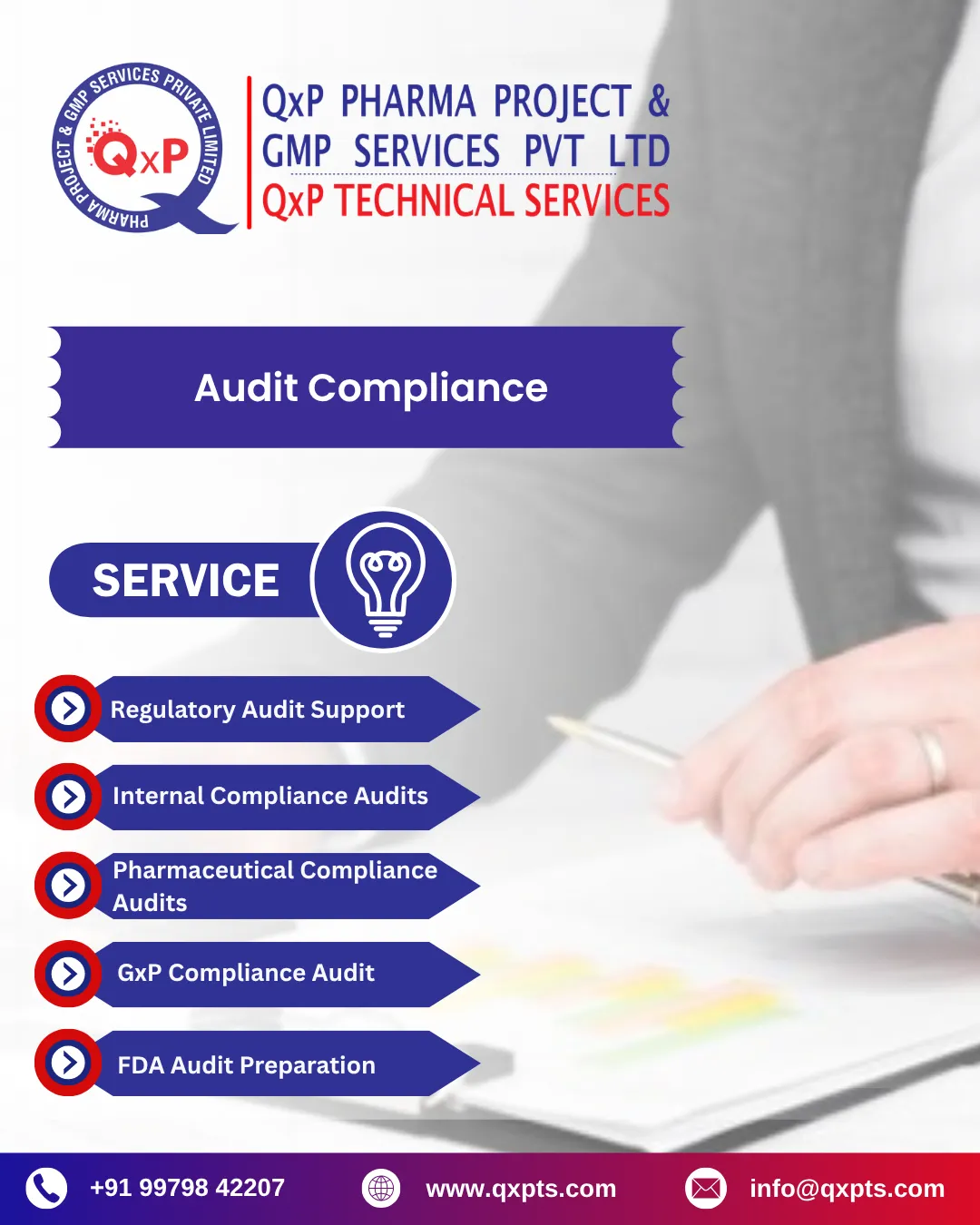
Audit compliance keeps your licence safe protects your customers and defends your brand. Missing one control can lead to fines failed inspections or losing a contract. For pharma manufacturers the risks are even higher. Agencies like CDSCO and USFDA can inspect a plant, with little warning. This guide explains how audit compliance works what types of audits you might face and how to prepare with confidence.
What Is a Compliance Audit?
A compliance audit is a look at what a company does and the records it keeps. It makes sure the business follows its rules the law and the standards in its field. Auditors check papers talk to workers and watch how things work every day. Then they point out where there are problems and suggest ways to fix them.
Audits look at different areas: keeping information safe protecting personal details showing financial results making sure people are safe at work and making sure products are good. In the medicine industry they also look at manufacturing practices keeping proper records and making sure information is correct. Most businesses do audits as part of a plan for keeping things in order. This plan includes rules checking on things teaching people and making sure someone is, in charge.
Why Are Compliance Audits Important?
Rules change quickly. Regulators enforce them strongly. A strong audit and compliance system helps you spot mistakes before an inspector arrives. The benefits are:
- penalty risk. Under GDPR severe violations can cost up to EUR 20 million or 4% of annual revenue whichever is higher.
- Higher customer trust. Buyers and partners prefer suppliers with audit records.
- Stronger operations. Audit reveals processes, duplicate work and unclear responsibilities.
- Faster approvals. Well‑documented systems shorten inspections and licence renewals.
Consider a pharma example. A missing batch record or an unqualified utility can delay a certificate by months. Regular audits catch gaps early.
Internal Audits vs External Audits: What’s the Difference?
From my experience an internal audit uses your team to test your own policies and improve efficiency. From my experience an external audit uses a party to reassure regulators, customers and investors
| Factor | Internal audit | External audit |
|---|---|---|
| Conducted by | In-house team | Independent third party or regulator |
| Main goal | Improve processes, find gaps early | Give assurance to outside stakeholders |
| Frequency | Ongoing, often quarterly | Usually annual or per inspection |
| Output | Improvement actions | Formal opinion or certification |
Both internal audit and external audit must stay impartial.From my experience smart companies run audit first so the external audit brings no surprises.
What Are the Different Types of Compliance Audits?
Different rules require audits. These are the common types.
Cybersecurity Audits
These audits check your controls against frameworks like NIST CSF, ISO 27001 and SOC 2. They look at access control, incident response and recovery planning.
Data Privacy and Protection Audits
These audits check how you collect, store, share and delete personal data. GDPR in Europe CCPA in California and HIPAA for US health data are standards. In India the Digital Personal Data Protection Act 2023 sets duties for handling personal data. Pharma companies have patient, clinical trial and employee data so privacy checks are important.
Financial Reporting and Security Audits
These audits check the accuracy of statements and the strength of financial controls. SOX requires US companies to maintain internal controls and pass an annual independent audit. PCI DSS protects cardholder data. In India statutory audits under the Companies Act 2013 have a role.
ESG, Health and Safety Audits
ESG audits check social claims against frameworks like CSRD and GRI. Safety audits check workplace rules such as ISO 45001 and OSHA requirements.
GMP and Regulatory Audits
For pharma GMP audits assess premises, equipment, documentation, quality systems and data integrity. Inspectors from CDSCO, USFDA and WHO-GMP programmes use these audits to make decisions about approvals. The revised Schedule M has made things harder, for manufacturers.
Audit Compliance in India vs USA: How Regulations Differ
Rules vary from country to country but the main idea is the same: show that your systems are working properly.
Audit Compliance in India
companies have to deal with a number of different groups. Pharma companies follow the Drugs and Cosmetics Act and Schedule M under CDSCO and state regulators. Companies that are listed follow SEBI rules all companies follow the Companies Act and those who handle data follow the DPDP Act. Audit compliance in India also covers GST and tax audits.
Audit Compliance in USA
US businesses have to deal with SOX, HIPAA, PCI DSS and state privacy laws like CCPA. Pharma companies that export have to deal with USFDA cGMP inspections under 21 CFR Parts 210 and 211. Inspectors can give Form 483 observations and major problems can lead to warning letters. Audit compliance, in USA therefore needs records and fast fixes.
Indian exporters have to meet both sets of rules so having one quality system helps save time and money.
Audit Compliance Steps: How an Audit Works
Rules vary from country to country but the goal remains the same: show that your systems are functional.
Audit compliance in India
Audit compliance in India requires companies to answer to many authorities. Pharma units follow the Drugs and Cosmetics Act and Schedule M under CDSCO and state regulators. Listed companies follow SEBI rules all companies follow the Companies Act. Data handlers follow the DPDP Act. Audit compliance in India also includes GST and tax audits.
Audit compliance in USA
A Audit compliance in USA means US businesses must handle SOX, HIPAA, PCI DSS and state privacy laws such as CCPA. Pharma exporters face USFDA cGMP inspections under 21 CFR Parts 210 and 211. Inspectors can issue Form 483 observations and serious gaps lead to warning letters. Audit compliance, in USA therefore demands records and quick corrective action.
Indian exporters must meet both systems so a single unified quality system saves time and money.
What Is Compliance Software?
Compliance software helps you keep track of requirements and get ready, for audits. Leading tools offer:
- Real‑time monitoring of data security and regulatory status.
- Dashboards that give one view of all compliance activity.
- Automated data capture and reporting that speeds up audit preparation.
- Templates that simplify policy setup.
Pharma teams should also search for document control, deviation and CAPA tracking and audit trails that support data integrity. Compliance software helps,. It cannot replace trained people and shop‑floor discipline.
Best Practices to Stay Audit-Ready
- Assign every regulation to a named owner.
- Keep documents controlled and easy to retrieve.
- Train staff regularly. Record every session.
- Run audits twice a year.
- Close every CAPA with proof.
- Review your systems after each change.
Why Choose QxP Pharma Project & GMP Services?
QxP Pharma Project Consultant & GMP Services Private Limited has supported pharma manufacturers from Ahmedabad since 2018. Our audit compliance support rests on plant experience, not paperwork alone.
Experienced leadership. Mr. Pankaj Sojitra (Lead Consultant, 22+ years, in pharma turnkey projects) and Mr. Vijay Patel (Senior GMP & Regulatory Expert 18+ years) guide every project.
Proven track record. Our team has delivered 300+ turnkey and GMP compliance projects.
Trusted credentials. We follow ISO 9001:2015 aligned processes hold membership of the Indian Pharmaceutical Association (IPA) and regularly contribute to CDSCO and WHO-GMP guideline implementations.
Practical cost-effective solutions. We offer on-time delivery and full regulatory support for CDSCO, USFDA, WHO-GMP and Schedule M.
Explore our GMP consulting and turnkey services to see how we help plants stay inspection-ready.
Conclusion
Strong audit and compliance systems protect your licence, your revenue and your reputation. Begin with ownership, controlled documents and regular mock audits. Then use software to keep records up, to date. Pharma companies that prepare pass inspections faster and gain more trust.
Need expert help? Contact QxP Pharma Project & GMP Services at +91 99798 42207, +91 99798 94611 or info@qxpts.com. Our office is at D-471 (Fourth Floor), Sobocenter, Above Wholesale Market, Gala Gymkhana Road, South Bopal, Bopal, Ahmedabad, Gujarat-380058, India.
FAQs
Q.What is audit compliance?
- Audit compliance means making sure that a business follows all the laws, rules and policies that apply to it. This is done by conducting an audit.
Q.How often should a company run a compliance audit?
- A company should run compliance audits at least twice a year. External compliance audits usually happen a year or when a government agency schedules an inspection.
Q.Is audit compliance in India different from audit compliance in USA?
- Yes audit compliance in India is different from audit compliance in the USA. In India the focus is on CDSCO, Schedule M, the Companies Act and the DPDP Act. In the USA the focus is, on USFDA cGMP, SOX, HIPAA and state-level privacy laws.
Q.Can software replace an auditor?
- No software cannot fully replace an auditor. Software can help monitor and report data.. Human auditors are still needed to assess risk talk to employees and check what actually happens in the workplace.
