


Subtotal $0.00
How Can GMP Technical Services Improve Audit Readiness?
GMP Technical Services improve audit readiness by ensuring facilities, equipment, documentation, validation, and quality systems consistently meet regulatory expectations. Implementing How Technical Services Improve GMP Compliance helps identify compliance gaps, strengthen SOPs, maintain accurate records, and prepare teams for successful inspections.
QxP Pharma Project Consultants & GMP Services provides expert technical solutions that enhance operational efficiency, minimize audit observations, and support continuous GMP compliance for pharmaceutical manufacturing facilities.
How Technical Services Improve GMP Compliance
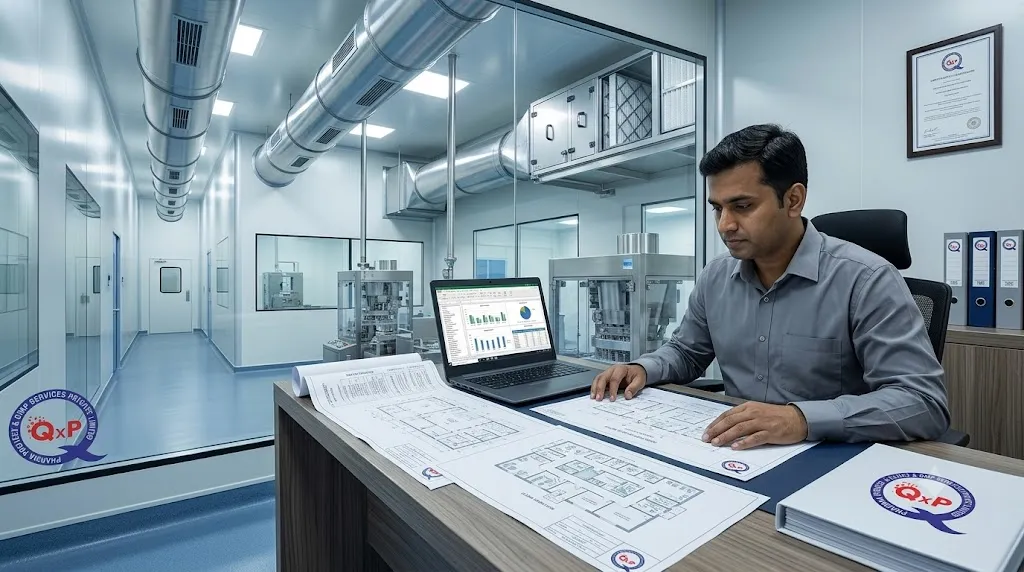
If you’ve ever walked a Gujarat FDA or CDSCO inspector through a facility where the HVAC design was an afterthought, you know exactly how expensive that mistake becomes. Technical services — HVAC and Clean Room Partition engineering, qualified utilities, validated equipment, and documented process flows — aren’t a checkbox exercise. They’re the backbone that determines whether your GMP compliance holds up during a real audit or crumbles under the first tough question. Over 300+ projects, we’ve seen the difference good technical planning makes, and it usually shows up long before the inspector ever walks in.
Why Choose QxP Pharma Project & GMP Services for How Technical Services Improve GMP Compliance
QxP Pharma Project & GMP Services was set up in 2018 with a fairly simple premise — most compliance failures aren’t about paperwork, they’re about engineering decisions made too early, without regulatory input. Led by Mr. Pankaj Sojitra (22+ years in pharma turnkey projects) and Mr. Vijay Patel (18+ years in GMP and regulatory affairs), our team has handled everything from a 2,000 sq. ft. oral solid dosage unit in Indore to a full sterile injectable facility near Vadodara. We follow ISO 9001:2015 aligned processes and stay active with the Indian Pharmaceutical Association, which keeps us close to how CDSCO and WHO-GMP expectations are actually evolving, not just what’s written in circulars.
What we bring isn’t theory — it’s shop-floor experience. When someone tells us their pharma manufacturing unit setup cost India estimate feels too tight, we can usually tell within a site visit whether the HVAC sizing or the clean room panel spec is where the budget is quietly bleeding.
Our How Technical Services Improve GMP Compliance Consulting Capabilities
Here’s how QxP Pharma Project & GMP Services approaches technical services as a compliance tool, not just a construction requirement:
- HVAC and clean room design — airflow patterns, pressure cascades, and ACPH calculations aligned to WHO GMP facility layout planning principles, not generic templates
- Utility qualification — water systems, compressed air, and nitrogen lines documented from URS through PQ
- Equipment and process validation — DQ/IQ/OQ/PQ protocols that inspectors can actually trace back to your process
- Facility layout consulting — material and personnel flow designed to prevent cross-contamination risk, a common Schedule M observation
- Documentation architecture — SOPs, validation master plans, and change control systems built alongside the technical design, not bolted on afterward
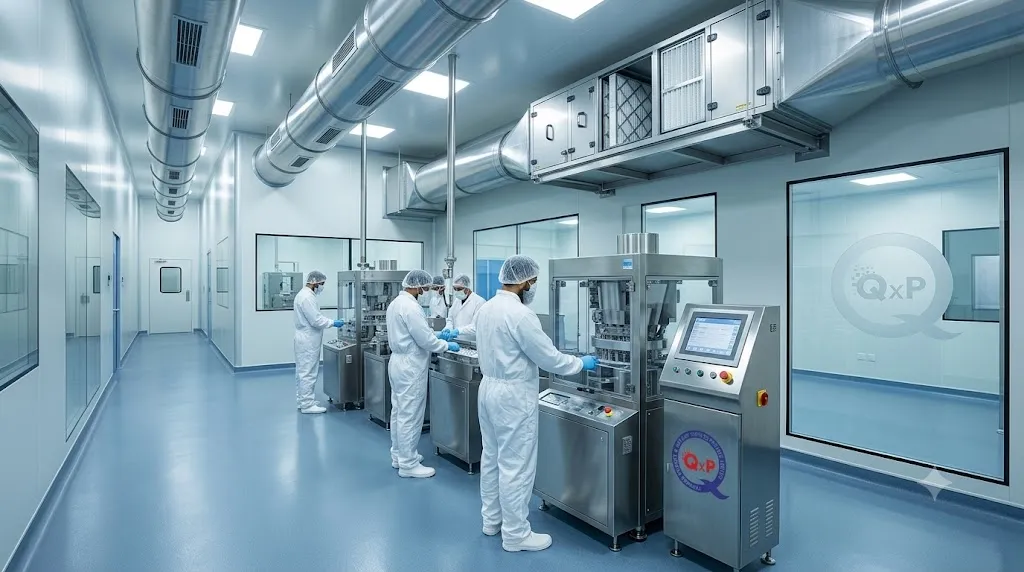
As a pharma factory layout consultant, we’ve learned that fixing a poorly planned corridor after installation costs three to four times more than getting it right on paper first. A GMP plant design consultant India should be involved from the layout stage, not called in after the walls go up.
Navigating Regulatory Compliance & GMP Standards
Yes, we provide end-to-end regulatory support — CDSCO, USFDA, WHO-GMP, and Schedule M — but the real value is connecting technical decisions to regulatory outcomes before construction starts. Schedule M revisions have pushed many mid-sized manufacturers in Surat, Chennai, and Jaipur to re-evaluate facilities that were compliant five years ago but no longer meet current documentation and validation expectations.
A Schedule M compliance consultant worth hiring will map your technical services against the specific clauses your product category triggers — sterile products demand a very different clean room design consultant India approach than a topical or oral solid dosage line. We also lean on WHO GMP guidelines implementation experience for clients exporting to regulated or semi-regulated markets, where the documentation trail matters as much as the physical build.
Pharmaceutical validation services aren’t a one-time event either — utilities and equipment need periodic requalification, and we build that into the technical handover so clients in Pune and Hyderabad aren’t scrambling before their next audit cycle.
Local Consultants vs QxP Pharma Project & GMP Services
| Parameter | Typical Local Consultant | QxP Pharma Project & GMP Services |
|---|---|---|
| Technical + regulatory integration | Often handled by separate teams | Combined from layout stage onward |
| Project experience | Varies, often limited disclosure | 300+ documented turnkey and GMP projects |
| Validation documentation | Frequently reactive, post-construction | Built into technical design phase |
| Regulatory affiliations | Not always specified | IPA member, ISO 9001:2015 aligned |
| Cost transparency | Estimates often revised mid-project | Detailed cost guide shared upfront |
Step-by-Step Process – How We Deliver How Technical Services Improve GMP Compliance
- Site and process assessment — understanding your product category, batch sizes, and existing infrastructure
- Technical design — HVAC, clean room classification, and utility planning mapped to your regulatory target
- Documentation framework — URS, DQ, and validation master plan drafted alongside design, not after
- Execution support — vendor coordination, installation oversight, and IQ/OQ/PQ execution
- Compliance handover — SOPs, training, and a Free GMP Gap Assessment Checklist so your team knows exactly where things stand before any audit
This is also where startup founders in Bangalore or Kolkata usually ask about Turnkey Project Experts for Seamless Industrial DeliveryF — the honest answer is that proximity helps with site visits, but the technical rigor matters far more than the consultant’s postal code.
Real Client Case Study
A mid-sized oral solid dosage manufacturer near Ahmedabad (we’ll call them “Client A” for confidentiality) came to us after failing a Gujarat FDA inspection over airflow validation gaps in their tablet compression area. Their HVAC system had been installed by a general contractor without pharma-specific pressure cascade design. We re-engineered the clean room layout, requalified the utilities, and rebuilt their validation documentation from scratch — DQ through PQ — over roughly 14 weeks. On re-inspection, the same observations didn’t recur, and the client’s export approval process, which had stalled for nearly eight months, moved forward within the following quarter. It’s a fairly typical story — the technical gap was invisible until someone with regulatory eyes looked at the mechanical drawings.
A smaller, similar situation played out with a Chandigarh-based client whose compressed air system lacked proper filtration validation; a two-week technical audit caught it before it became an inspection finding.
Frequently Asked Questions
Q1.How do technical services affect GMP compliance during inspections?
- Technical services — HVAC, clean rooms, and utilities — directly determine whether your facility can demonstrate contamination control and process consistency, which are core inspection focus areas under Schedule M and WHO-GMP.
Q2.What is the typical pharma manufacturing unit setup cost India for a mid-sized facility?
- Costs vary significantly by product category and scale, generally depending on clean room classification, HVAC complexity, and equipment validation scope; a detailed cost guide is available on request.
Q3.Do I need a GMP consultant in Ahmedabad if my facility is elsewhere in India?
- Not necessarily by location — what matters is the consultant’s technical and regulatory experience; many of our clients in Pune, Chennai, and Delhi work with us remotely with periodic site visits.
Q4.How long does a typical HVAC and clean room validation take?
- Depending on facility size and product complexity, validation typically takes 8 to 16 weeks from design qualification through performance qualification.
Q5.Is Schedule M compliance mandatory for all pharmaceutical manufacturers in India?
- Yes, Schedule M under the Drugs and Cosmetics Rules applies to all licensed pharmaceutical manufacturing units in India, with revised provisions raising documentation and infrastructure expectations.
Q6.Can existing facilities be upgraded for GMP compliance without full reconstruction?
- Often yes — many gaps, particularly in HVAC and utility qualification, can be addressed through targeted retrofits rather than complete rebuilds, depending on the original layout.
Q7.What documentation is required alongside technical services for CDSCO approval?
- CDSCO approval typically requires validation master plans, DQ/IQ/OQ/PQ protocols, SOPs, and facility layout drawings that align with the physical technical build.
For a technical review of your facility or a Free GMP Gap Assessment Checklist, reach QxP Pharma Project & GMP Services at +91 99798 42207 / +91 99798 94611, email info@qxpts.com, or visit us at D-471 (Fourth Floor), Sobocenter, South Bopal, Ahmedabad.
