


Subtotal $0.00
How Does Sterility Assurance Level Support GMP Compliance?
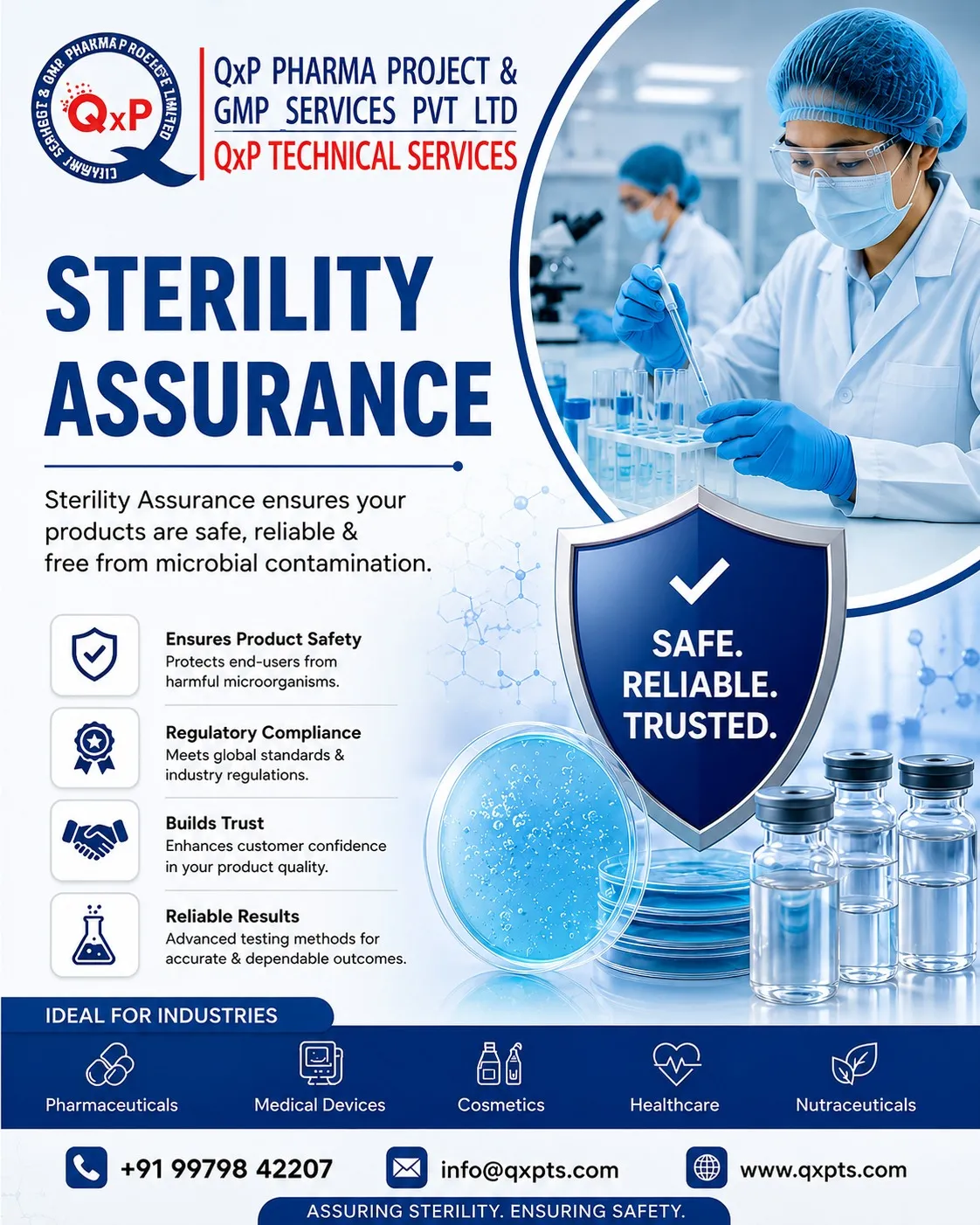
Sterility Assurance Level supports GMP compliance by providing a measurable framework for controlling contamination risks during sterilization and aseptic processing. Sterility Assurance Level helps pharmaceutical manufacturers establish validated processes, maintain consistent sterility controls, and strengthen product quality. Qxp Pharma & GMP Service supports risk assessment, sterilization validation, process qualification, documentation, and compliance strategies to improve audit readiness and ensure reliable sterile manufacturing operations.
Sterility Assurance Level Overview: A Practical Guide for Indian Pharma Manufacturers
If you are setting up a sterile injectable, ophthalmic, or biologics facility in India, one term you cannot afford to misunderstand is Sterility Assurance Level (SAL). Importantly, it is not just a regulatory checkbox—it helps demonstrate whether your sterilization process can consistently achieve the required level of sterility assurance and whether your facility is prepared for a CDSCO or USFDA audit. In addition, plant heads and founders often approach us after their sterilization validation has failed, asking why their supposedly “GMP-compliant” line could not demonstrate an SAL of 10⁻⁶. Therefore, getting this right at the design stage is essential. For example, cleanroom layout, sterilization method, contamination control, and validation protocols must work together. As a result, addressing Sterility Assurance Level requirements early can help reduce validation failures, avoid costly rework, and support a more robust GMP-compliant facility.
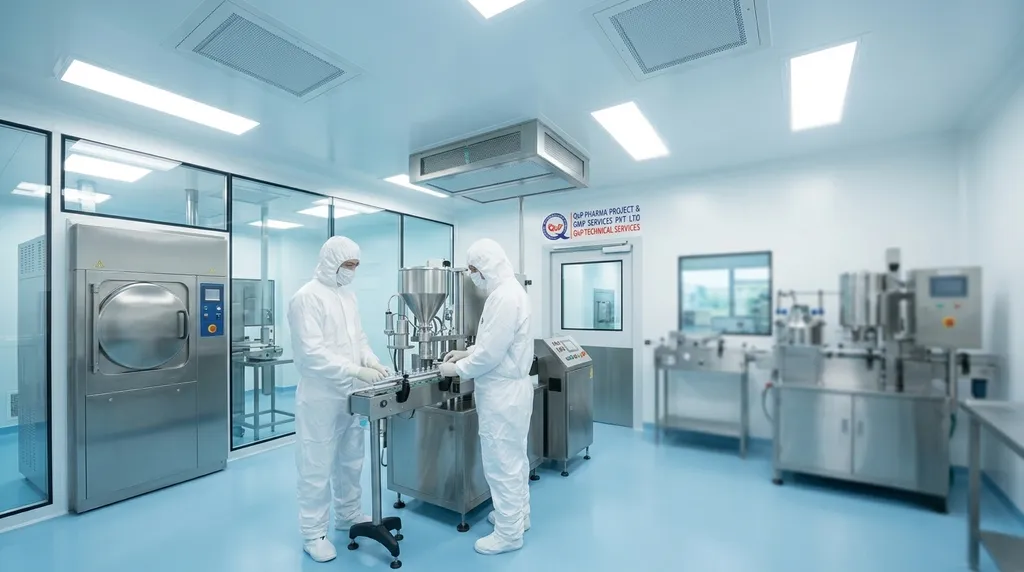
Sterility Assurance Level (SAL) is a probability measure — typically 10⁻⁶ for terminally sterilized products — indicating the likelihood of a single viable microorganism surviving a sterilization process. Achieving and documenting SAL correctly requires the right cleanroom classification, validated sterilization cycle (steam, dry heat, ethylene oxide, or filtration), and supporting bioburden and biological indicator data, all aligned with Schedule M and WHO-GMP requirements.
Why Choose QxP Pharma Project & GMP Services for Sterility Assurance Level Overview
Here’s how QxP Pharma Project & GMP Services approaches SAL consulting differently from a typical documentation-only vendor. The team gets involved from the facility design stage, rather than waiting until validation begins.
Founded in 2018 and based in Ahmedabad, Gujarat, QxP has worked on 300+ turnkey and GMP compliance projects. Many of these projects involve sterile and aseptic manufacturing facilities. Mr. Pankaj Sojitra, Lead Consultant, brings 22+ years of experience in pharma turnkey projects. Mr. Vijay Patel, Senior GMP & Regulatory Expert, has 18+ years of regulatory exposure across CDSCO, USFDA, and WHO-GMP audits. Together, they review sterility assurance strategies before the documentation team finalizes them.
This approach matters because SAL failures are rarely caused by documentation alone. Instead, they often originate from process or facility design gaps. For example, an HVAC system may fail to maintain the required ISO 5 conditions under operating loads. Similarly, an autoclave cycle may be validated using an incorrect or non-representative load configuration.
Therefore, involving an experienced GMP consultant in Ahmedabad at the design stage can identify these risks much earlier. Practical experience with autoclaves, HVAC systems, cleanrooms, and aseptic filling lines helps connect facility design with validation requirements.
As a result, QxP’s approach focuses on preventing compliance gaps before they become validation failures. This can reduce rework, strengthen the Sterility Assurance Level strategy, and improve overall GMP audit readiness.
Our Sterility Assurance Level Overview Consulting Capabilities
The best way to think about SAL consulting is as three connected layers: facility design, sterilization process validation, and ongoing environmental monitoring. QxP Pharma Project & GMP Services supports all three, including clean room design consultant India-level detailing of air handling unit (AHU) capacity, room pressure cascades, and material/personnel flow to prevent cross-contamination in aseptic zones.
Depending on the product — a terminally sterilized small-volume parenteral behaves very differently from an aseptically filled biologic — the appropriate SAL benchmark and sterilization approach changes. The table below summarizes commonly referenced SAL benchmarks by product category.
Sterility Assurance Level (SAL) Benchmarks by Product Category
| Product Category | Typical Sterilization Method | Target SAL | Key Validation Reference |
|---|---|---|---|
| Terminally sterilized small-volume parenterals | Moist heat (autoclave) | 10⁻⁶ | Schedule M, WHO-GMP Annex on Sterile Products |
| Aseptically filled biologics/injectables | Sterile filtration + aseptic fill | 10⁻³ (process-based, not overkill) | Media fill / process simulation studies |
| Medical devices (single-use, heat-sensitive) | Ethylene oxide (EO) | 10⁻⁶ | ISO 11135 (referenced internationally) |
| Ophthalmic preparations | Moist heat or aseptic filtration | 10⁻⁶ | Schedule M sterile product requirements |
Navigating Regulatory Compliance & GMP Standards
Yes, we provide complete Schedule M compliance consultant support for sterility assurance documentation, and this is usually where Indian manufacturers lose the most time. The revised Schedule M guidelines place greater emphasis on validated sterilization cycles, biological indicator (BI) challenge studies, and environmental monitoring trend data — not just a certificate stating the autoclave was serviced. CDSCO approval consultant work in this area typically involves reviewing the Validation Master Plan (VMP), Design Qualification (DQ), Installation Qualification (IQ), Operational Qualification (OQ), and Performance Qualification (PQ) protocols for the sterilization equipment, alongside WHO GMP guidelines implementation for cleanroom classification (ISO 5, ISO 7, ISO 8).
Different sterilization methods carry different validation parameters, and mixing them up is one of the most common reasons an audit observation gets raised.
Sterilization Methods and Core Validation Parameters
| Sterilization Method | Critical Parameters Monitored | Common Validation Study |
|---|---|---|
| Moist heat (autoclave) | Temperature, pressure, exposure time, F0 value | Heat distribution & heat penetration study |
| Dry heat | Temperature uniformity, dwell time | Depyrogenation validation (for glass vials) |
| Ethylene oxide (EO) | Gas concentration, humidity, exposure time, aeration | EO residual testing |
| Sterile filtration + aseptic fill | Filter integrity (bubble point), fill line environment | Media fill / aseptic process simulation |
These validation studies are also central to pharmaceutical validation services offered as part of our broader turnkey pharma plant setup near me engagements, since the sterilization equipment and the room it sits in have to be qualified together, not as separate projectsThese validation studies are also central to pharmaceutical validation services offered as part of our broader turnkey pharma plant setup near me engagements, since the sterilization equipment and the room it sits in have to be qualified together, not as separate projects
Local Consultants vs QxP Pharma Project & GMP Services
Founders in Mumbai, Pune, or Indore often start with a local freelance consultant for cost reasons, and that can work fine for a basic oral solid dosage line. For sterile facilities, the gap becomes visible quickly once the DQ/IQ/OQ/PQ documentation is reviewed by an auditor.
| Parameter | Typical Local Consultant | QxP Pharma Project & GMP Services |
|---|---|---|
| Sterile facility experience | Often limited to oral solid dosage | 300+ turnkey and GMP projects, including sterile lines |
| Involvement at design stage | Usually joins after civil work is done | Involved from HVAC and layout design onward |
| Regulatory liaison (CDSCO/USFDA) | Case-by-case, variable depth | Ongoing CDSCO and WHO-GMP contribution experience |
| Documentation quality | Template-based, may need rework | Built on ISO 9001:2015 aligned processes |
Step-by-Step Process – How We Deliver Sterility Assurance Level Overview
The process our team follows for an SAL consulting engagement is fairly consistent, whether the client is in Hyderabad, Chennai, or Surat:
- Gap assessment — Review of existing cleanroom design, sterilization equipment, and current validation status.
- Facility & utility design review — AHU capacity, room pressure cascade, WFI and pure steam generation, compressed air quality, all checked against the target cleanroom classification.
- Sterilization method finalization — Choosing between moist heat, dry heat, EO, or sterile filtration based on product sensitivity and container-closure system.
- Validation protocol development — DQ, IQ, OQ, PQ documentation, heat distribution/penetration studies, biological indicator studies.
- Regulatory submission support — CDSCO approval consultant assistance for Schedule M sterile product licensing.
- Post-validation monitoring setup — Environmental monitoring program and trending, to keep SAL demonstrable on an ongoing basis, not just at the time of validation.
Real Client Case Study
A mid-sized injectable manufacturer based near Vadodara — referred to here as Client A for confidentiality — approached QxP Pharma Project & GMP Services after their autoclave validation was flagged during an internal audit. The heat penetration study showed inconsistent temperature distribution across the load, and their existing documentation could not demonstrate a reliable SAL of 10⁻⁶ across all load configurations.
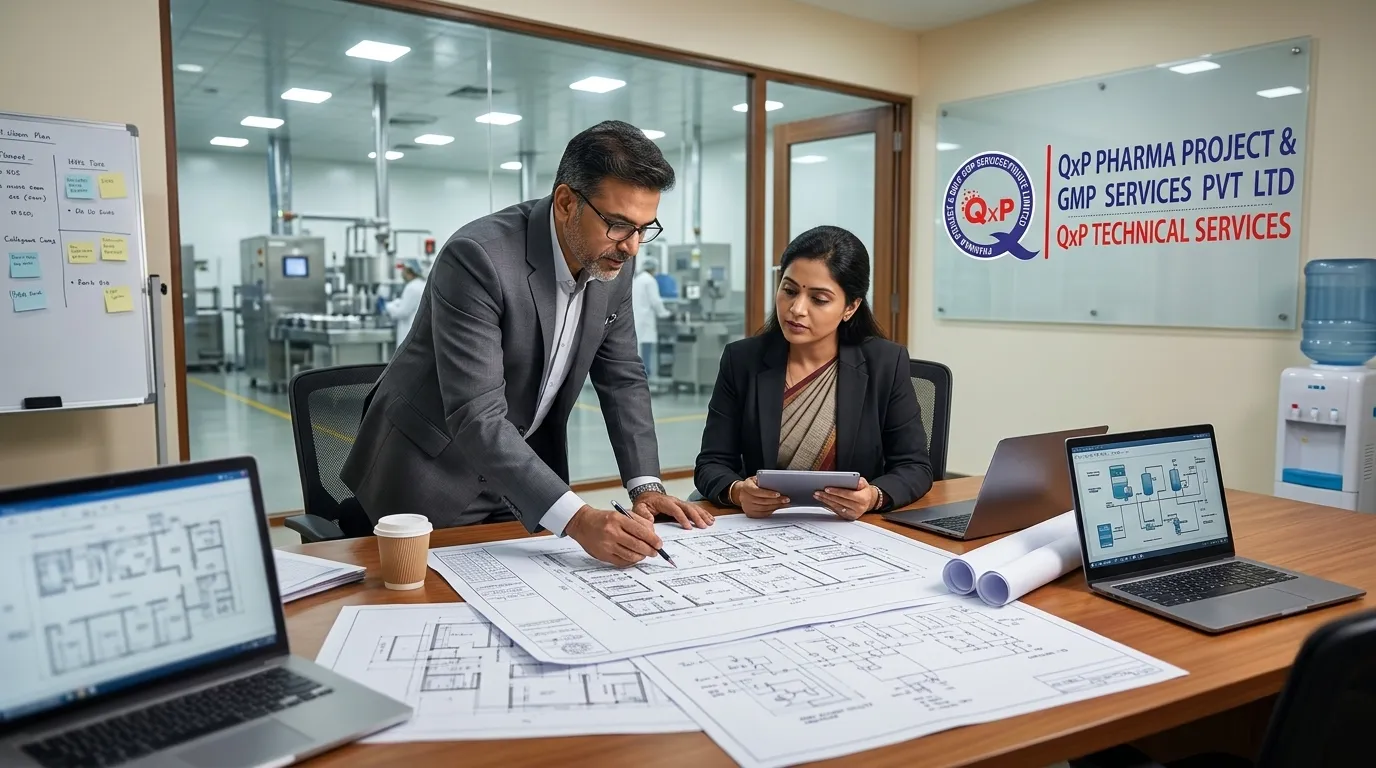
The team reviewed the autoclave loading pattern, identified that the chamber was being overloaded relative to its validated configuration, and redesigned the loading SOP along with a fresh heat distribution and heat penetration study. Combined with updated biological indicator placement based on cold-spot mapping, the client was able to demonstrate consistent SAL compliance and cleared their subsequent CDSCO inspection without a sterility-related observation. This kind of correction is common — the equipment itself was rarely the actual problem; the load configuration and documentation around it were. If you are unsure whether your current sterilization validation would hold up to similar scrutiny, our Free GMP Gap Assessment Checklist is a usefulstarting point, and you can also Download our Pharma Plant Setup Cost Guide if you are still in the planning phase. For a quick conversation, our WhatsApp line at +91 99798 42207 is usually the fastest way to reach the team.
Frequently Asked Questions
Q1. What does Sterility Assurance Level (SAL) mean in pharmaceutical manufacturing?
- SAL is a probability value, most commonly 10⁻⁶, representing the likelihood that a single viable microorganism survives a validated sterilization process on a given unit.
Q2. What SAL is required for injectable products in India?
- Terminally sterilized injectable products are generally expected to demonstrate an SAL of 10⁻⁶, in line with Schedule M and WHO-GMP expectations for sterile products.
Q3. How is SAL different for aseptically filled products?
- Aseptic processing relies on process control and media fill validation rather than a single terminal sterilization step, so the assurance is demonstrated through process simulation studies rather than a direct SAL calculation.
Q4. What documents are needed to prove SAL compliance during a CDSCO audit?
- Auditors typically expect DQ/IQ/OQ/PQ protocols, heat distribution and penetration study reports, biological indicator study results, and environmental monitoring trend data.
Q5. How much does sterility assurance validation cost for a small Indian pharma unit?
- Costs vary based on facility size, sterilization method, and existing documentation gaps; a structured gap assessment is the most reliable way to get an accurate estimate for your specific line.
Q6. Can QxP Pharma Project & GMP Services help with both facility design and validation?
- Yes, QxP Pharma Project & GMP Services supports both the cleanroom/utility design stage and the subsequent sterilization validation and regulatory submission stage as a connected process.
Contact QxP Pharma Project & GMP Services D-471 (Fourth Floor), Sobocenter, Above Wholesale Market, Gala Gymkhana Road, South Bopal, Bopal, Ahmedabad, Gujarat-380058, India Phone: +91 99798 42207 | +91 99798 94611 | Email: info@qxpts.com
