


Subtotal $0.00
What Are the Benefits of GxP Training for Pharma Companies?
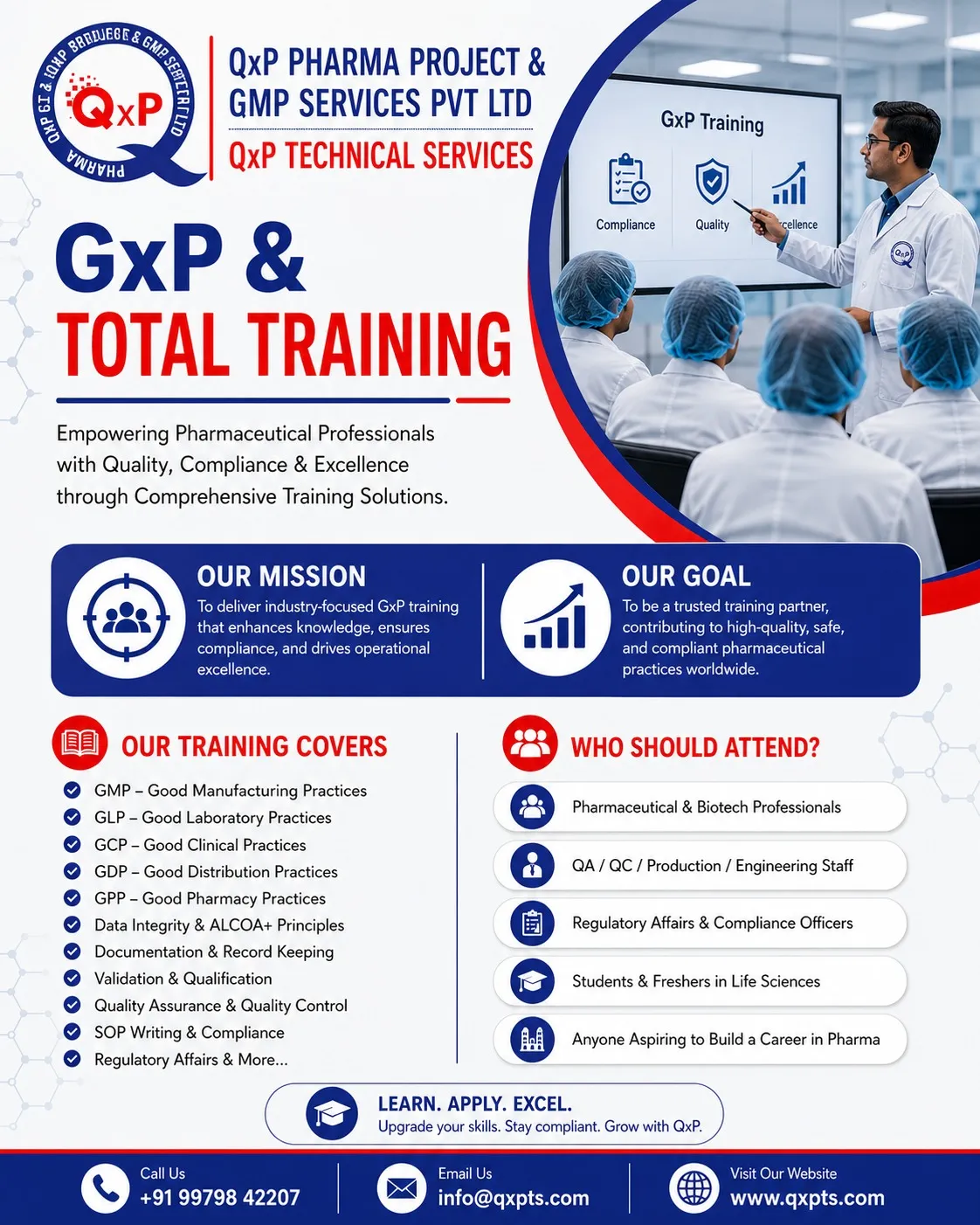
GxP training helps pharma companies strengthen compliance, improve employee awareness, and reduce regulatory risks. Why GxP Training Matters in Pharma becomes clear through better understanding of GMP, data integrity, documentation, and quality systems. Regular training supports audit readiness, consistent processes, and a stronger quality culture.
QxP Pharma & GMP Service provides structured GxP training designed to build practical knowledge and support pharmaceutical teams in maintaining regulatory and operational excellence.
Why Choose QxP Pharma Project & GMP Services for GxP Training Advisory
Here’s how QxP Pharma Project & GMP Services approaches GxP training differently — we don’t hand over a generic PowerPoint and call it a day. Founded in 2018 and based in South Bopal, Ahmedabad, our team has been on the shop floor of over 300 turnkey and GMP compliance projects, which means our training modules are built from real audit observations, not textbook theory.
Our lead consultant, Mr. Pankaj Sojitra, carries 22+ years of hands-on experience in pharma turnkey projects, and Mr. Vijay Patel, our Senior GMP & Regulatory Expert with 18+ years in the field, has personally handled regulatory documentation for CDSCO, USFDA, and WHO-GMP submissions. Our processes are aligned with ISO 9001:2015, and we remain an active member of the Indian Pharmaceutical Association (IPA), regularly contributing to WHO-GMP guideline implementation discussions.
What this means practically: when we train your quality team in Vadodara or your production supervisors in Indore, the content isn’t borrowed from a training vendor’s template — it’s shaped by what actually trips up plants during real inspections.
Our GxP Training Consulting Capabilities
The best training programs don’t just cover “what” GxP requires — they explain “why,” because that’s what actually changes behaviour on the floor. Our capabilities span the full GxP spectrum:
- GMP (Good Manufacturing Practice) training — hygiene, documentation, batch record accuracy, and deviation handling
- GLP (Good Laboratory Practice) training — for QC labs handling stability studies and analytical testing
- GDP (Good Distribution Practice) training — cold chain, warehousing, and dispatch discipline
- Clean room behaviour and gowning protocol workshops, closely tied to clean room design consultant India best practices we implement during plant setup
- Data integrity (ALCOA+) training for electronic and paper-based records
- Mock audit sessions simulating actual CDSCO and Gujarat FDA inspection scenarios
We’ve delivered these modules for clients across Mumbai, Chennai, Hyderabad, and Surat — and honestly, the biggest gap we notice isn’t lack of knowledge, it’s lack of practice. People know the rule but haven’t rehearsed applying it under audit pressure.
Navigating Regulatory Compliance & GMP Standards
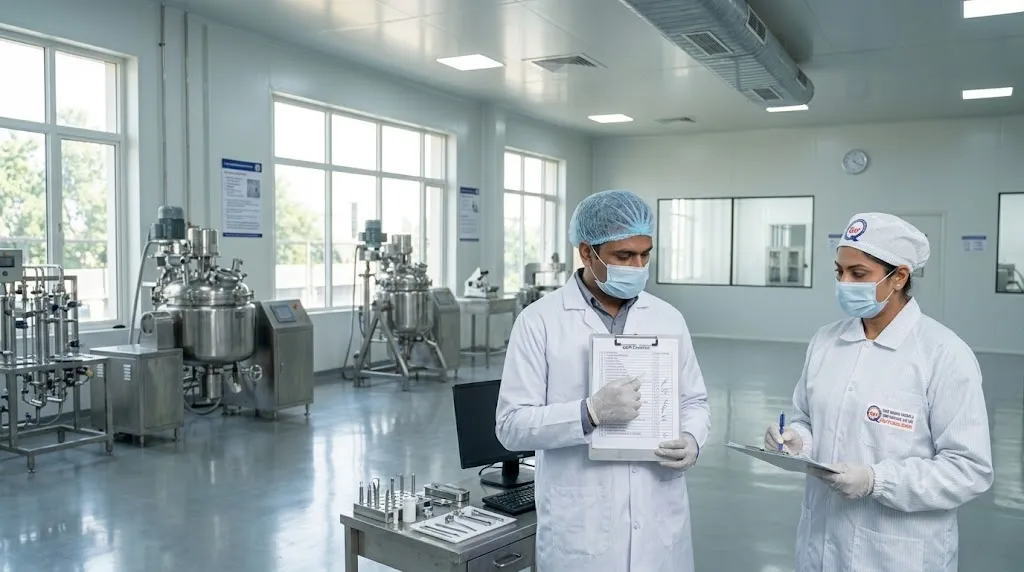
Yes, we provide training that is directly mapped to Indian regulatory expectations, not just international frameworks copy-pasted for the Indian market. Schedule M (as revised) now places explicit emphasis on documented training records — auditors routinely ask to see training logs alongside SOPs. This alone has made GxP training a compliance checkpoint, not an optional HR activity.
CDSCO Documentation Requirements for GxP Training
CDSCO inspectors expect three things at minimum during any audit: a training calendar, signed attendance records, and a competency evaluation for each employee. Missing even one of these is routinely flagged as an observation.
- Post-training competency assessment scores, not just attendance
- Corrective training triggered automatically after any deviation or CAPA
Schedule M Training & Competency Mandates
The revised Schedule M is explicit about personnel qualification — it’s no longer enough to say staff are “trained”; you need to show how competency was measured. Schedule M compliance consultant support typically covers:
- Role-based training matrices linking job function to required GxP modules
- Periodic re-qualification for critical roles (aseptic operators, QC analysts)
- SOP version control tied to retraining triggers whenever a document is revised
WHO-GMP Personnel Qualification Norms
WHO GMP guidelines implementation places heavy weight on ongoing competency, not one-time induction. For export-oriented units in Hyderabad and Chennai working toward WHO-GMP certification, we typically build in:
- Structured onboarding training for new hires before floor access is granted
- Refresher cycles aligned with WHO-GMP audit frequency
- Cross-functional training so QA can validate QC and production understanding, and vice versa
State FDA and USFDA Audit Expectations
Domestic Gujarat FDA audits and export-focused USFDA reviews don’t ask the same questions, and treating them identically is a common mistake we see plants make.
- Gujarat FDA audits typically focus on Schedule M documentation completeness and local SOP adherence
- USFDA reviews go deeper into data integrity (ALCOA+) and electronic record training
- Pharmaceutical validation services teams need separate, more technical training modules than general production staff
We’ve seen plants in Jaipur and Chandigarh get first-time-right approvals simply because their teams could confidently explain the “why” behind each SOP to the inspector — not just recite it. That confidence comes from structured training, repeated periodically, not a one-time induction session.
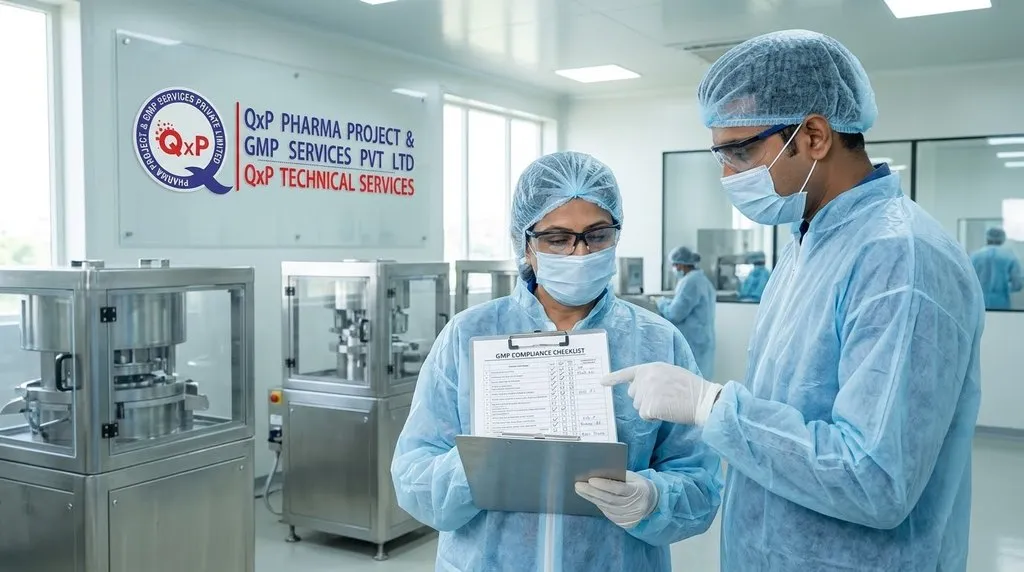
Local Consultants vs QxP Pharma Project & GMP Services
Founders often ask us how we compare with the local training vendor they’ve already spoken to. Here’s an honest, criteria-by-criteria breakdown:
| Criteria | Local / Freelance Trainers | QxP Pharma Project & GMP Services |
|---|---|---|
| Content Source | Generic content, often reused across unrelated industries | Built from 300+ real turnkey and GMP compliance projects |
| Audit Exposure | Limited or no real audit exposure with CDSCO or State FDA | Direct experience preparing clients for CDSCO, USFDA, and WHO-GMP audits |
| Documentation Support | One-time session with no follow-up documentation help | Structured training calendar with refresher sessions and record-keeping formats |
| Plant Design Linkage | No connection to actual plant layout or cleanroom issues | Training linked to plant layout, cleanroom design, and Schedule M documentation |
| Cost Transparency | Looks lower upfront, but re-training costs can add up after failed audits | Transparent scope with cost tied to measurable audit readiness |
| Post-Training Follow-up | Rarely tracks whether training actually improved audit performance | Mock audits, competency scoring, and periodic refresher scheduling included |
In short:
- If you need a one-off compliance box ticked, a local trainer may suffice for now
- If you need audit-ready documentation your QA head can defend under questioning, structured GxP training with linkage to plant design and regulatory strategy tends to hold up better over repeated inspection cycles
- Cost should be evaluated against re-training and re-audit expenses, not just the initial invoice
Step-by-Step Process – How We Deliver GxP Training
Our approach is fairly straightforward, and we keep it that way on purpose:
- Step 1 – Gap Assessment: We start with our Free GMP Gap Assessment Checklist to understand where your team currently stands on documentation, hygiene, and process discipline.
- Step 2 – Custom Module Design: Based on your product category (oral solids, injectables, or API), we design training content specific to your operations, not a one-size-fits-all deck.
- Step 3 – On-Floor Training: Sessions happen where the work happens — production floor, QC lab, warehouse — because classroom-only training rarely sticks.
- Step 4 – Mock Audit Simulation: We run a simulated inspection so your team experiences real audit pressure before the actual CDSCO or Gujarat FDA visit.
- Step 5 – Documentation Handover: Every session is logged with attendance, competency evaluation, and signed training records — ready for audit trail purposes.
- Step 6 – Periodic Refreshers: GxP isn’t a one-time certificate; we recommend and schedule refresher training every 6–12 months.
For clients also exploring a new facility, we naturally connect this with our pharma turnkey project consultant services, since training and plant design decisions often need to move together — a good clean room design consultant India process is only as effective as the people trained to work inside it.
Real Client Case Study
One of our clients — a mid-sized oral solid dosage manufacturer near Pune — approached us after receiving observations in a Gujarat FDA audit related to incomplete batch documentation and inconsistent gowning practices. Their plant itself was well-equipped; the gap was purely in personnel training and documentation discipline.
We began with our Free GMP Gap Assessment Checklist, identified 14 specific training gaps across production and QC, and designed a 6-week structured training program combining classroom sessions with on-floor practical drills. We also introduced a mock audit two weeks before their scheduled re-inspection.
Result: the client cleared their follow-up audit with zero major observations, and their internal QA head later told us the mock audit “felt more stressful than the real one” — which, honestly, is exactly the outcome we aim for. A smaller example: a client in Kolkata reduced documentation-related deviations by nearly 40% within three months of implementing our training-linked recordkeeping format.
If you’re setting up a new facility and want training built into your project timeline from day one rather than bolted on later, our GMP consultant in Ahmedabad team can walk you through how we sequence training alongside construction and validation milestones. Similarly, founders exploring costs can request our Download our Pharma Plant Setup Cost Guide, which includes a section on typical training and compliance line items often missed in early budgeting.
Frequently Asked Questions
Q1. What is GxP training in pharmaceutical manufacturing?
- GxP training refers to structured education on Good Practice guidelines — GMP, GLP, and GDP — that ensures personnel understand hygiene, documentation, data integrity, and process discipline required under Schedule M and WHO-GMP frameworks.
Q2. Why is GxP training mandatory for CDSCO audit readiness?
- Because auditors now routinely check training records alongside SOPs. Without documented, periodic GxP training, even a well-built plant can receive observations for personnel competency gaps during a CDSCO or Gujarat FDA inspection.
Q3. How often should pharma staff undergo GxP refresher training?
- Most regulatory bodies expect refresher training every 6 to 12 months, along with immediate re-training whenever a new SOP, equipment, or regulatory update is introduced.
Q4. When should GxP training start for a new pharma plant?
- Ideally, training should begin during the pre-commissioning phase, running parallel with validation activities, so your team is audit-ready by the time the plant is operational — not after the first inspection flags a gap.
Q5. How does QxP Pharma Project & GMP Services structure its training programs?
- Our programs start with a gap assessment, followed by custom module design, on-floor practical sessions, a mock audit simulation, complete documentation handover, and scheduled refresher training.
Q6. What happens if a pharma company skips formal GxP training?
- Skipping formal training typically shows up as documentation errors, inconsistent gowning practices, and data integrity issues — all common reasons for audit observations, warning letters, or delayed product approvals.
Contact QxP Pharma Project & GMP Services D-471 (Fourth Floor), Sobocenter, Above Wholesale Market, Gala Gymkhana Road, South Bopal, Bopal, Ahmedabad, Gujarat-380058, India Phone: +91 99798 42207 | +91 99798 94611 | Email: info@qxpts.com
