


Subtotal $0.00
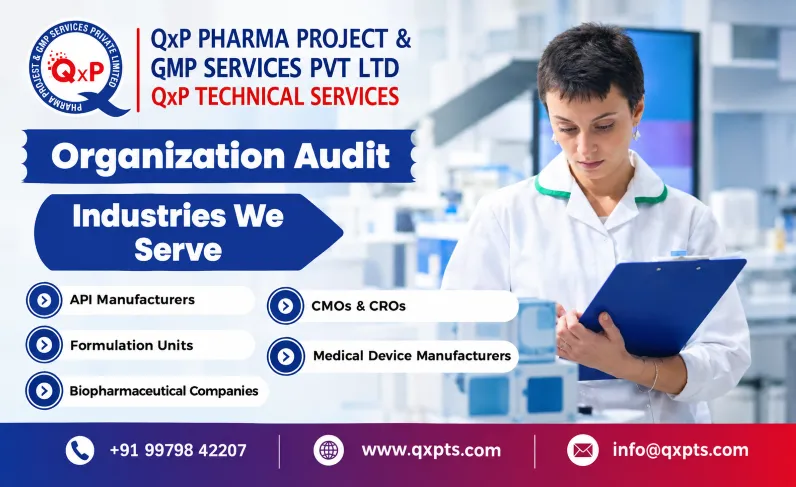
An organization audit is no longer a formality for Indian pharmaceutical companies. An organization audit is now a survival requirement.
Since January 2026 CDSCOs Revised Schedule M is fully enforced in every manufacturing unit, in India. Companies that skip an organization audit face licence suspension failed inspections and loss of export credibility.
This guide explains everything you need to know. This guide defines what an organization audit means why it matters for pharma and this guide shows the process, checklist and report structure that makes a compliant company safe and a vulnerable company unsafe.
What Is an Organization Audit?
An organization audit is a independent review of a company’s processes, paperwork, quality systems, facilities and regulatory compliance. An organization audit shows the differences between what the Standard Operating Procedures (SOPs) specify and what really occurs on the shop floor.
For manufacturers an organization audit is not only, about paperwork. An organization audit includes the premises, equipment qualification, utilities, staff training, data integrity and quality risk management. These are the areas that CDSCO inspectors and State Drug Controllers examine when they visit for licensing and renewal.
Why Organization Audit for Pharma Companies Is -Negotiable
Pharmaceutical manufacturing carries a level of risk that most other industries do not. A missed deviation, a change or a poorly maintained equipment log can directly affect patient safety. This is why a GMP Organization Audit is treated as a core business function, not an occasional formality.
Here is what a pharma-focused Organization Audit uncovers:
Documentation gaps. Missing batch records, incomplete SOPs or outdated validation protocols.
Facility design issues. Layout problems that risk cross-contamination or fail airflow requirements.
Training deficiencies. Staff unaware of GMP practices or deviation-handling procedures.
Quality system weaknesses. CAPA processes that exist on paper but are not actually followed.
Regulatory misalignment. Practices that do not match CDSCO, WHO‑GMP or USFDA expectations.
Catching these issues internally through an Organization Audit costs far less than a regulatory rejection, a product recall or a delayed export shipment.
The Organization Audit Process: Step by Step
A Organization Audit process follows a defined sequence. Skipping steps is where most companies go wrong.
Pre‑Audit Planning
The audit team studies your facility type, product range and regulatory targets (CDSCO, WHO‑GMP, USFDA or Schedule M). This decides the scope, timeline and which departments will be reviewed.
Document Review
Before anyone walks the shop floor the team reviews SOPs, validation master plans batch manufacturing records, training records and audit or inspection reports.
On‑Site Facility Assessment
This is where the real picture emerges. Auditors physically inspect production areas, warehouses, quality control labs and utility systems comparing what they see against what the documents claim.
Gap Identification
Every observation is categorised by severity. Critical, major or minor.. Management understands what needs immediate attention versus what can be scheduled over time.
Corrective Action Planning
A practical CAPA (Corrective and Preventive Action) plan is built with the client’s team keeping cost and timeline constraints in mind.
Final Organization Audit Report
The findings are compiled into a actionable Organization Audit report giving management a documented reference for internal tracking and for demonstrating due diligence, to regulators or clients.
Organization Audit Checklist: What Gets Reviewed
While every place is different a good organization audit checklist usually includes:
- Facility layout and material flow
- HVAC and utility qualification status
- Equipment qualification (IQ/OQ/PQ) records
- Batch manufacturing and packing records
- Quality control and quality assurance procedures
- Deviation, CAPA and change control systems
- Vendor qualification and raw material handling
- Personnel training records and hygiene practices
- Document control and data integrity practices
- regulatory or client audit closures
Looking at this checklist often. Not only, before an inspection. Is what makes companies pass audits easily and others rush at the last moment.
Why Choose Us
Generic auditors can read paperwork. Pharmaceutical compliance needs people who have worked on production floors handled inspections and fixed real GMP problems. This is where QxP Pharma Project Consultant & GMP Services Private Limited offers a kind of value.
Established in 2018 and based in Ahmedabad, Gujarat, QxP Pharma Project & GMP Services has finished than 300 turnkey and GMP compliance projects across the pharmaceutical sector. The organization is led by:
- Mr. Pankaj Sojitra, Lead Consultant with 22+ years of hands‑on experience in pharma turnkey projects.
- Mr. Vijay Patel, Senior GMP & Regulatory Expert with 18+ years of regulatory experience.
This combination of leadership means QxP does not offer advice. The team has practical shop‑floor experience and understands exactly what regulators and international clients look for.
What Sets QxP Apart
- Practical and cost‑effective solutions, not templates.
- On‑time project delivery, respecting your production timelines.
- Full regulatory support across CDSCO, USFDA, WHO‑GMP and Schedule M requirements.
- Processes aligned with ISO 9001:2015.
- Active involvement with the Indian Pharmaceutical Association (IPA).
- Regular contribution to CDSCO and WHO‑GMP guideline implementation.
If you need a first‑time organization audit a pre‑inspection readiness check or ongoing GMP compliance support QxP’s team works alongside your staff not around them to build systems that stand up under real regulatory scrutiny.
Counclusion
An organization audit is not a one‑time compliance exercise; it is a discipline that protects your licence, your reputation and ultimately patient safety. Companies that treat audits as a tool rather than a reaction to an inspection notice consistently perform better during CDSCO, WHO‑GMP and USFDA reviews.
If your pharmaceutical facility is due for an organization audit or you simply want a second opinion on your current compliance status QxP Pharma Project & GMP Services is ready to help.
Get in touch, with QxP Pharma Project Consultant & GMP Services Private Limited:
📍 D‑471 (Fourth Floor) Sobocenter, Above Wholesale Market, Gala Gymkhana Road, South Bopal, Bopal, Ahmedabad, Gujarat – 380058 India📞 +91 99798 42207 | +91 99798 94611📧 info@qxpts.com
FAQs
1. What is an organization audit?
- It is an independent review of a company’s systems, processes, and documentation to check compliance and operational efficiency.
2. Why is organization audit important for pharma companies?
- It ensures GMP compliance, protects patient safety, and prepares the facility for regulatory inspections like CDSCO, WHO-GMP, and USFDA.
3. How long does a pharma organization audit take?
- It usually takes 2–5 days, depending on facility size and audit scope.
4. What is included in an organization audit checklist?
- Facility layout, equipment qualification, batch records, QA/QC processes, training records, and data integrity practices.
5. Who should conduct an organization audit?
- A specialised organization audit company with hands-on pharma and GMP experience, not a generic auditor.
6. What is the outcome of an organization audit?
- A detailed organization audit report listing gaps, severity levels, and a corrective action (CAPA) plan.
