


Subtotal $0.00
Pharmaceutical Project Commissioning: Practical Guidance for a Faster, Safer GMP Start-Up
A well-planned pharmaceutical project commissioning program reduces delays, prevents repeat work, and helps your team move from equipment installation to compliant commercial readiness with fewer surprises. In Indian pharma projects, the real challenge is rarely just buying machines. It is aligning utilities, cleanrooms, documentation, validation logic, production flow, and statutory expectations in one workable sequence. That is where QxP Pharma Project & GMP Services brings practical value for promoters, plant heads, and QA leaders planning expansion in Ahmedabad, Mumbai, Hyderabad, Bangalore, Chennai, Pune, Surat, Vadodara, Delhi, Jaipur, Indore, Kolkata, and Chandigarh.
Why Choose QxP Pharma Project & GMP Services for Pharmaceutical Project Commissioning?
The best commissioning outcomes come from people who understand both drawings and shop-floor realities. QxP Pharma Project & GMP Services works with a field-first approach shaped by actual execution experience, not only presentation-level planning. Established in 2018, the company is led by Mr. Pankaj Sojitra, Lead Consultant with 22+ years in pharma turnkey projects, and Mr. Vijay Patel, Senior GMP & Regulatory Expert with 18+ years. Together with their team, they have delivered 300+ turnkey and GMP compliance assignments.
Yes, this matters during commissioning because the last 10% of a project often decides whether the whole facility starts smoothly or gets stuck in utility mismatch, HVAC imbalance, poor material flow, or documentation gaps. In one Surat oral solid dosage project, a client had fully installed equipment but no practical sequence for area readiness, air balancing, and line clearance logic. A structured commissioning review helped avoid a two-month delay.
The company follows ISO 9001:2015 aligned processes and supports CDSCO, USFDA, WHO-GMP, and Schedule M requirements with realistic, cost-aware planning. If you are evaluating a pharma turnkey project consultant, the key thing to check is whether they can connect feasibility, engineering, qualification, and handover without creating rework at each stage.
For early-stage planning, many clients first review project viability through project feasibility services. That step often helps define utility loads, expansion scope, and the likely pharma manufacturing unit setup cost India teams should prepare for before commissioning even begins.
Our Pharmaceutical Project Commissioning Consulting Capabilities
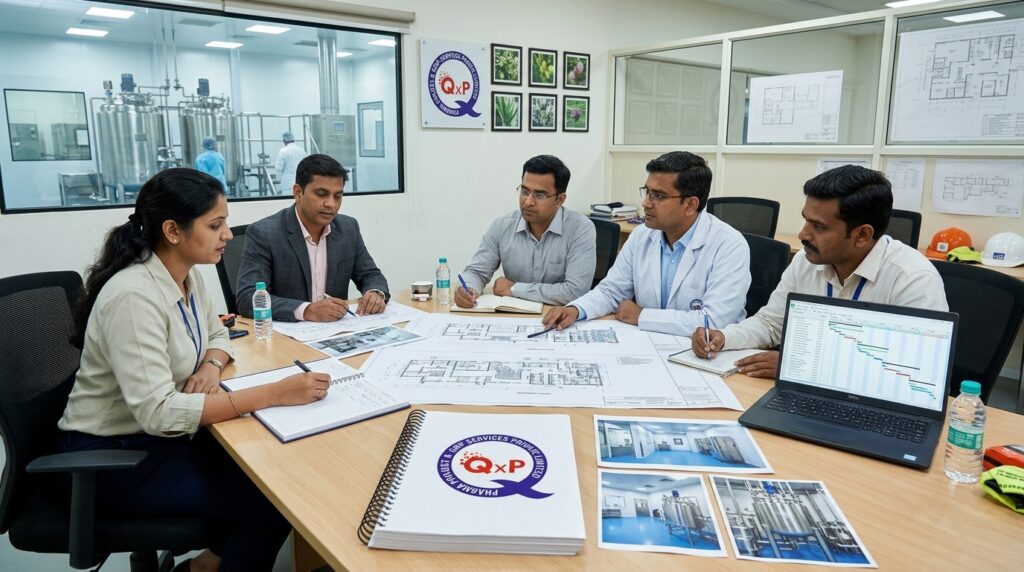
Here’s how QxP Pharma Project & GMP Services usually supports commissioning across dosage forms and facility types. The work starts with utility and area readiness checks, then moves into equipment verification, cleanroom coordination, SOP alignment, and validation support. This is especially useful for companies planning a turnkey pharma plant setup near me but struggling to compare paper planning with actual site conditions.
The scope commonly includes commissioning plans for HVAC, purified water, compressed air, process gases, dust extraction, electrical panels, BMS links, and production equipment integration. It also covers line-wise readiness for tablets, capsules, liquid oral, ointment, injectable support areas, and warehousing operations. For clients looking for a GMP plant design consultant India or clean room design consultant India, commissioning support becomes the bridge between approved design intent and operating reality.
A practical example: in Hyderabad, one formulation company had a well-designed AHU system on paper, but return air routing created operational inconvenience during actual line movement. Catching such issues during commissioning is far cheaper than modifying ducts after validation. Similar situations are common in Bangalore and Chennai, where companies move fast on expansion and then discover coordination gaps between civil, HVAC, and process teams.
For design-stage alignment, engineering coordination with design and engineering execution is important. It helps ensure the pharma factory layout consultant, utility vendors, and QA team are working to the same commissioning sequence.
This is also where clients ask practical questions:
- How long does pharma commissioning take?
- When should qualification start?
- Can production SOPs be drafted before trial runs?
- What should be frozen before WHO inspections?
The short answer is yes, but only if commissioning is treated as a controlled project stage, not as a last-minute post-installation activity.
Get a Quote for Pharmaceutical project commissioning
Navigating Regulatory Compliance & GMP Standards
Yes, we provide commissioning support with regulatory readiness in mind, because a running plant is not automatically a compliant plant. Indian facilities must align with CDSCO expectations, revised Schedule M requirements, and relevant WHO GMP guidance depending on product category and market goals. That means area classification, material-personnel movement, cleaning logic, documentation trails, and qualification evidence all need to stand up to review.
A reliable GMP consultant in Ahmedabad should not only tell you what the guidelines say, but also how they play out during execution. For example, WHO GMP facility layout planning is not just about room names on a drawing. It affects operator movement, pass box use, pressure cascade stability, and contamination control. Likewise, a Schedule M compliance consultant should review whether the commissioning sequence actually supports later validation and inspection readiness.
In many Indian projects, especially in Delhi, Jaipur, and Kolkata, I have seen the same issue: qualification protocols are drafted before utility systems are stable. That leads to repeat tests, repeat reports, and frustration between QA and engineering. Proper pharmaceutical validation services should begin with controlled commissioning data, not assumptions.
For broader execution support, clients often explore turn-key project consulting and project management services. When combined with site documentation and a capable CDSCO approval consultant, the commissioning phase becomes much easier to defend during audits.
A small success story illustrates this well. A promoter from Mumbai setting up a nutraceutical-cum-pharma block wanted faster readiness before investor review. By correcting water loop circulation points and documenting trial observations properly, the team completed key readiness checks without costly repeat visits. The client later requested the Free GMP Gap Assessment Checklist and asked to Download our Pharma Plant Setup Cost Guide for phase two planning.
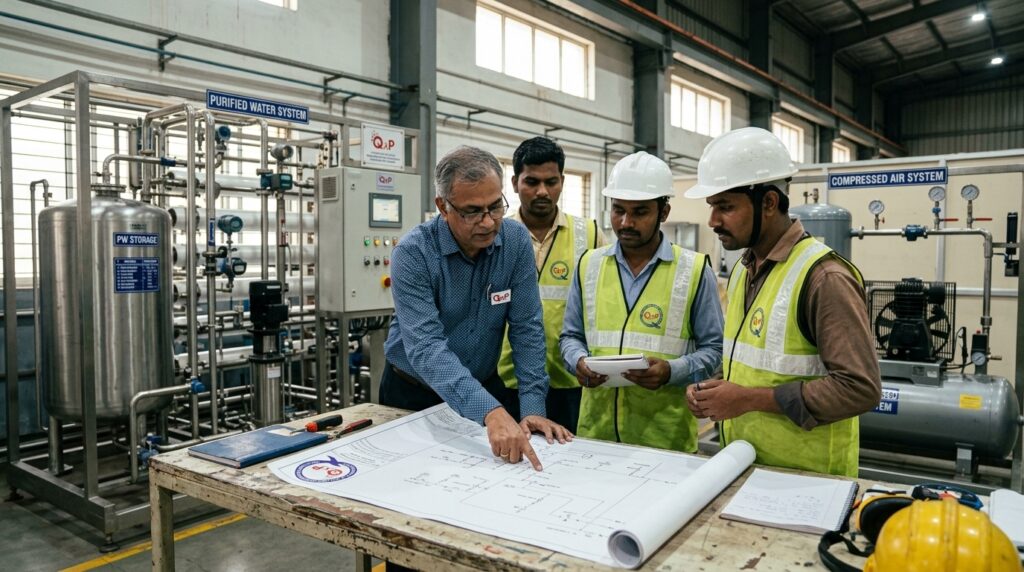
Local Consultants vs QxP Pharma Project & GMP Services (Comparison Table)
The best comparison is not about big claims. It is about how much practical risk each approach removes during execution.
| Parameter | Typical Local Consultant | QxP Pharma Project & GMP Services |
|---|---|---|
| Commissioning Planning | Basic checklist approach | Integrated utility, equipment, GMP, and documentation planning |
| Regulatory Alignment | Often generic | Aligned to CDSCO, WHO-GMP, Schedule M, and inspection logic |
| Shop-Floor Practicality | Limited cross-functional coordination | Strong practical focus on movement, utilities, cleaning, and operator use |
| Validation Readiness | Starts late | Commissioning data supports qualification and validation planning |
| Geographic Support | Usually local only | Support across major Indian pharma clusters including **Ahmedabad** and **Pune** |
For companies comparing options, these background reads can help: pharma project consulting in India and top pharma consulting services in India.
Step-by-Step Process – How We Deliver Pharmaceutical Project Commissioning
Here’s how QxP Pharma Project & GMP Services generally structures the work.
First, the team reviews approved layouts, utility drawings, equipment list, and intended regulatory pathway. This identifies whether the facility is being prepared for domestic licensing, export readiness, or staged scale-up.
Second, site verification is done for installed systems. That includes room status, service points, air handling logic, drain slope, electrical availability, and interdepartment coordination. This is where a pharma factory layout consultant and utility team must speak the same language.
Third, system-wise commissioning checks are planned. HVAC, water systems, compressed air, differential pressure logic, process equipment, and cleaning support utilities are reviewed in sequence. If the project also needs WHO GMP guidelines implementation, evidence capture begins here.
Fourth, documentation is aligned. Commissioning records, SOP drafts, deviation notes, engineering observations, and handover files are prepared so QA is not left reconstructing facts later.
Fifth, trial readiness and validation interface are handled. This stage matters for firms looking for a CDSCO approval consultant or structured pharmaceutical validation services support.
Finally, a snag list and closure matrix are issued so the client can move into qualification and commercial preparation with confidence.
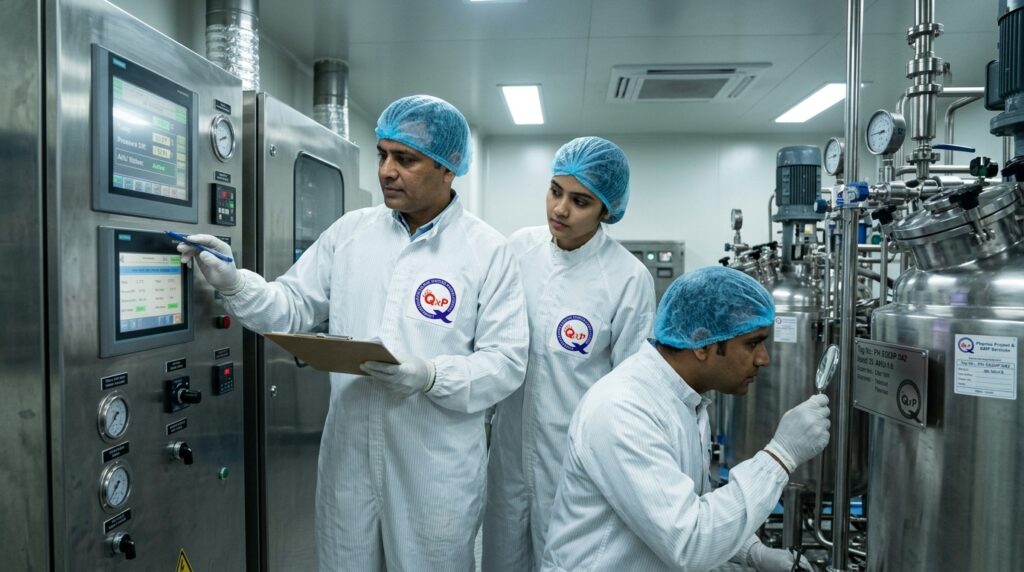
Real Client Case Study
Here’s how one real-style Indian example looked in practice. An anonymized client, “MediCure Formulations,” planned a new oral solids block near Vadodara with future marketing plans in domestic and semi-regulated markets. Equipment installation was nearly complete, but the project was slipping because engineering, QA, and production were not aligned on area handover.
The first issue was compressed air quality documentation. The second was operator and material movement overlap near dispensing. The third was trial batch planning before complete area readiness. On paper, everything looked close to finish. On site, it was not.
A structured commissioning intervention corrected the sequence. Utility verification was completed first. Room readiness was mapped line by line. SOP drafts were matched to actual machine operation. Then a staged trial plan was created for core equipment. Because the client also wanted stronger long-term planning, they reviewed top pharma consultant in India as part of their wider benchmark process.
Within weeks, the facility moved from confusion to a controlled readiness path. The key lesson was simple: commissioning is not a paperwork layer added after installation. It is the operational proof that design, equipment, utilities, people, and GMP logic can function together.
FAQs
1. What is pharmaceutical project commissioning?
- Pharmaceutical project commissioning is the structured process of checking and proving that facility systems, utilities, equipment, and support functions are installed correctly and are ready for qualification, validation, and routine GMP operations.
2. When should commissioning start in a pharma project?
- Commissioning should start before final installation is considered complete. The planning phase begins during design and engineering so utility loads, room logic, and handover sequence are already defined.
3. Is commissioning different from validation?
- Yes. Commissioning checks whether systems are ready to operate as intended. Validation and qualification formally document that they consistently perform as required for GMP use.
4. Why do Indian pharma plants face commissioning delays?
- Common reasons include design-execution mismatch, unstable utilities, poor vendor coordination, weak documentation, and late QA involvement. These are frequent in fast-track projects across Ahmedabad, Hyderabad, and Mumbai.
5. How do WHO GMP and Schedule M affect commissioning?
- They shape facility flow, contamination control, utility expectations, documentation, and operational discipline. If these are ignored during commissioning, later audit readiness becomes difficult.
6. Can commissioning reduce project cost overruns?
- Yes. Early issue detection prevents redesign, repeat qualification, delayed approvals, and repeated vendor visits. That directly controls cost and timelines.
7. How can we contact QxP Pharma Project & GMP Services?
- You can contact them at +91 99798 42207 or +91 99798 94611, email info@qxpts.com, or use WhatsApp and the contact page for project discussion, the Free GMP Gap Assessment Checklist, and the Pharma Plant Setup Cost Guide.
