


Subtotal $0.00

GMP Engineering Services for Pharma Plants in India
Setting up a compliant pharma facility is not just about civil work, machines, and paperwork. One design error in air handling, material flow, zoning, or utility planning can delay validation, trigger observations, and increase operating cost for years. This is where GMP engineering services become critical. They connect production goals with cleanroom logic, regulatory expectations, and practical site execution.
In this guide, you’ll learn how QxP Pharma Project & GMP Services approaches facility engineering for manufacturers in Ahmedabad, Mumbai, Hyderabad, Bangalore, Chennai, Pune, Delhi, and other growing pharma hubs. We’ll cover consulting scope, compliance planning, comparison factors, delivery process, a real case study, FAQs, and what to check before you appoint a pharma turnkey project consultant.
Why Choose QxP Pharma Project & GMP Services for GMP Engineering Services?
Here’s how QxP Pharma Project & GMP Services adds value in real project conditions. The company, formally known as QxP Pharma Project Consultant & GMP Services Private Limited, was established in 2018 and operates from D-471 (Fourth Floor), Sobocenter, Above Wholesale Market, Gala Gymkhana Road, South Bopal, Bopal, Ahmedabad, Gujarat-380058, India. Its team is led by Mr. Pankaj Sojitra, Lead Consultant with 22+ years in pharma projects, and Mr. Vijay Patel, Senior GMP & Regulatory Expert with 18+ years of experience.
Yes, experience matters most when drawings meet site realities. A layout may look perfect on paper, but if dispensing pressure cascades, personnel entry sequence, RLAF positioning, drain slope, or AHU access are not thought through early, the plant will suffer later. The team has supported 300+ turnkey and GMP compliance projects with practical, shop-floor-led execution.
The best support usually comes from consultants who understand both engineering and compliance. That is why clients looking for a GMP consultant in Ahmedabad often ask not only about documents, but also about HVAC zoning, utility balancing, cleanroom finishes, and validation readiness.
If you are evaluating training and compliance readiness for teams, you can also review their support on GxP and total training.
A founder from Surat once told me, “We thought equipment selection was the main issue. Later we realized our corridor logic was wrong.” That is a common mistake. In many projects across Vadodara, Indore, and Jaipur, the hidden losses come from poor planning, not from major capex decisions.
Consulting Capabilities
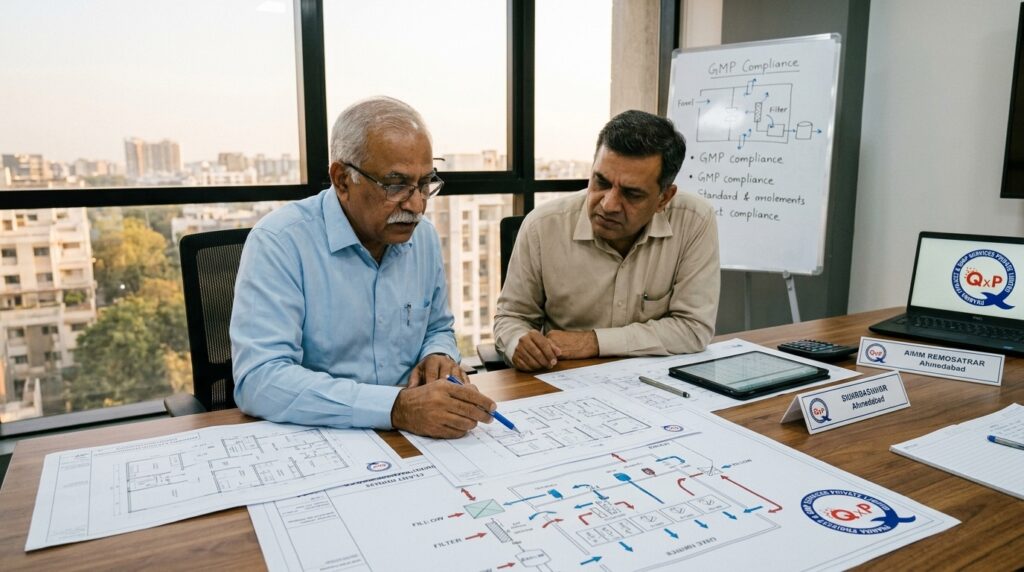
Yes, we provide end-to-end GMP engineering support based on project stage, dosage form, regulatory target, and budget. For a greenfield site, the work may begin with URS, block layout, people and material movement, utility estimation, and area classification. For a brownfield upgrade, the focus may be contamination control, line segregation, retrofit strategy, and documentation closure.
Typical consulting capabilities include:
- Facility concept and block planning
- Detailed layout review and WHO GMP facility layout planning
- HVAC and pressure differential strategy
- Water system, clean steam, compressed air, and utility mapping
- Material and personnel flow optimization
- Cross-contamination risk control
- Cleanroom finishes and engineering specifications
- Support as a clean room design consultant India
- Commissioning, qualification, and pharmaceutical validation services
The best engineering planning also considers cost from day one. Many clients ask about pharma manufacturing unit setup cost India because wrong utility sizing or room classification can push both capex and opex much higher than expected.
For regulatory systems and implementation planning, see GMP compliance and regulatory services.
In practical terms, a GMP plant design consultant India should know how to balance compliance with commercial reality. A startup in Chandigarh may need a modular, phase-wise rollout. A formulation unit in Kolkata may need controlled retrofit without stopping all production. A client searching for turnkey pharma plant setup near me often really needs local coordination plus deep GMP engineering judgment.
Mini success story: one oral solid dosage manufacturer near Ahmedabad faced repeated layout revisions because warehouse and dispensing access conflicted with material flow. After redesigning the sequence and adjusting airlocks, the client reduced unnecessary movement, improved audit readiness, and avoided costly rework during execution.
For project planning insights and execution-side content, refer to GMP services for pharma projects in India.
Get a Quote for GMP engineering services
Regulatory Compliance: CDSCO, WHO-GMP, and Schedule M
The best GMP engineering work starts with the end in mind: what approval path are you planning for? A domestic unit aiming at state FDA licensing has different intensity compared with a facility preparing for WHO-GMP, export registration, or future USFDA alignment. Still, the base logic must be strong from the start.
In India, engineering decisions must align with CDSCO expectations, state FDA interpretation, and revised Schedule M principles. This includes flows, HVAC control, environmental conditions, contamination prevention, utility quality, documentation traceability, and qualification evidence. WHO GMP guidelines implementation also pushes teams to think beyond room creation and focus on systems that remain controlled during routine operation.
A capable Schedule M compliance consultant will usually review:
- Zoning and segregation
- Wash and change room sequence
- Utility qualification impact
- Sampling and dispensing control
- Maintenance access without contamination risk
- Cleaning verification and line clearance practicality
For broader process and documentation support, visit GxP development services.
A client from Hyderabad once had a nearly complete injectable support area, but maintenance access crossed a cleaner zone. It looked minor. During mock audit review, it became a serious concern because routine intervention could affect contamination control. This is exactly why GMP engineering must be integrated with regulatory logic.
If you want background on plant-level consulting in the local market, this article on pharmaceutical GMP consulting services in Ahmedabad is relevant.
Comparison Table: Local Consultants vs QxP
Here’s a simple comparison many plant owners find useful before shortlisting a consultant.
| Parameter | Typical Local Consultant | QxP Pharma Project & GMP Services |
|---|---|---|
| Engineering + GMP integration | Often limited to drawings or documentation | Integrated view of facility, compliance, utilities, and validation |
| Leadership experience | Varies widely | Led by Mr. Pankaj Sojitra and Mr. Vijay Patel with deep sector experience |
| Regulatory understanding | May focus on only one approval path | Supports CDSCO, WHO-GMP, Schedule M, and broader compliance readiness |
| Project scale exposure | Usually limited | 300+ turnkey and GMP compliance projects |
| Execution practicality | May miss shop-floor constraints | Practical, cost-aware, on-site problem solving |
| Support after design | Often limited | Guidance through qualification, audits, and regulatory preparation |
If you are comparing providers in Mumbai, Delhi, or Bangalore, ask one practical question: who will own the gap between drawing approval and site reality? That answer tells you more than a polished proposal.
You can also review another relevant local resource here: pharma GMP consultant in Ahmedabad.
Step-by-Step Process
Here’s how QxP Pharma Project & GMP Services usually delivers GMP engineering services in a structured way.
1. Discovery and project definition
- The team understands dosage form, batch size, regulatory target, expansion plan, utilities, and land or building constraints. This stage avoids expensive redesign later.
2. Layout and flow planning
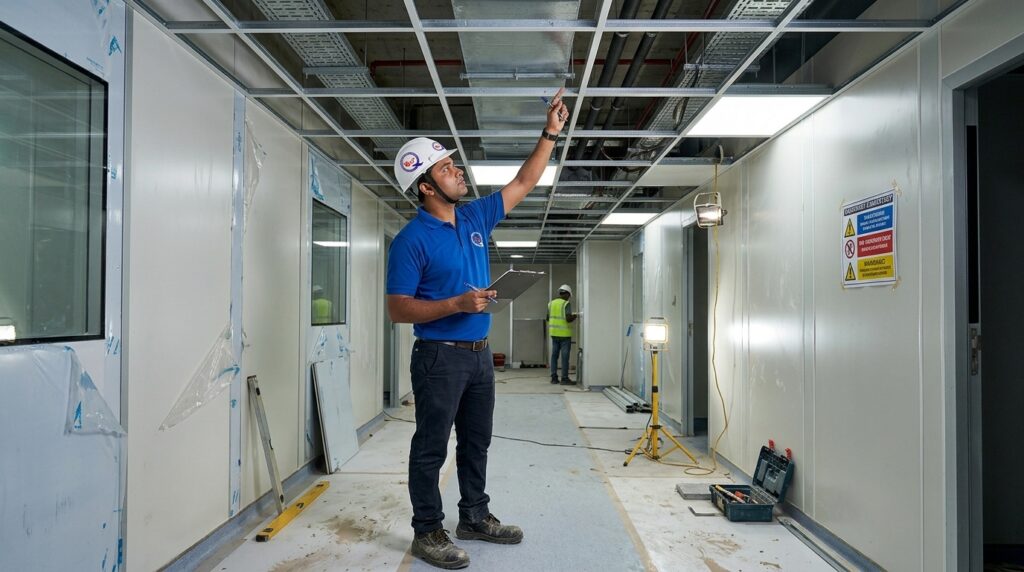
- A pharma factory layout consultant studies movement of men, material, waste, and equipment. This is where many compliance issues are prevented, not corrected.
3. Engineering basis and utility concept
- The next stage defines HVAC logic, cleanroom classes, water systems, electrical loads, and utility routing. This is also where a CDSCO approval consultant mindset helps because approvals depend on more than room names.
4. Detailed review and implementation support
- Drawings, BOQs, user requirements, and vendor coordination are aligned. The team reviews site progress and flags deviations before they become major non-conformities.
5. Qualification and audit readiness
- The last stage covers commissioning support, protocol planning, qualification logic, and documentation alignment. This helps the client move toward licensing and routine manufacturing with fewer surprises.
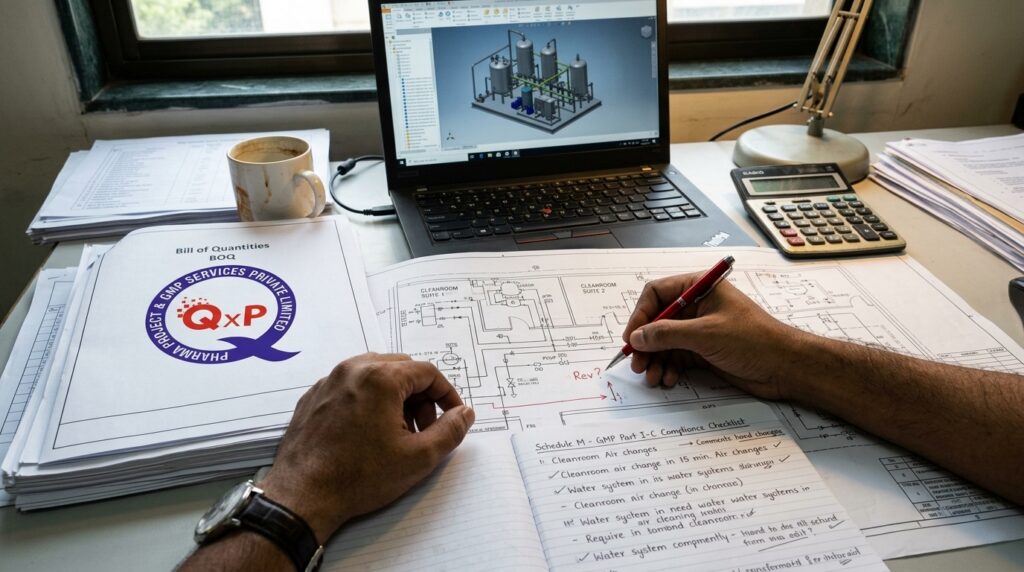
A practical add-on many clients request is a Free GMP Gap Assessment Checklist before finalizing scope. Another useful resource is “Download our Pharma Plant Setup Cost Guide” to compare design choices and likely investment bands. For faster discussion, many teams now prefer a WhatsApp first-level review before formal meetings.
Case Study
Here’s a realistic example from western India. An anonymized client, “Apex Formulations,” planned an oral solids facility serving domestic and semi-regulated markets. The site was near Pune, with promoters based in Ahmedabad and marketing plans extending to Chennai and Hyderabad.
The initial concept had three issues: poor warehouse-to-dispensing flow, overspecified HVAC in non-critical support areas, and no clear expansion path. The client also underestimated the documentation needed for qualification and inspection readiness.
The best fix was not a full restart. The consulting team reworked the zoning, simplified utility loads where possible, improved corridor logic, and created a phase-wise roadmap. Mr. Pankaj Sojitra focused on practical execution and vendor coordination. Mr. Vijay Patel reviewed compliance impact against CDSCO expectations, Schedule M principles, and WHO-GMP readiness.
Results over the next project cycle were meaningful:
- Reduced avoidable civil and utility rework
- Better pressure cascade logic
- Cleaner material movement
- Easier qualification planning
- Faster readiness for inspection-facing documentation
For the client, the biggest gain was confidence. The promoters knew what to build now, what to defer, and how to avoid common regulatory mistakes. That is often the real value of well-structured GMP engineering services.
FAQs
1. What do GMP engineering services include in a pharma project?
- They usually include layout planning, cleanroom and HVAC strategy, utility planning, contamination control, compliance alignment, and support for qualification readiness.
2. Do I need GMP engineering support for a small pharma unit?
- Yes. Even a small unit needs proper flow, zoning, utilities, and Schedule M-aligned planning. Smaller facilities often have less margin for layout mistakes.
3. How early should I involve a consultant?
- Ideally before finalizing architecture and utilities. Early involvement reduces redesign, approval delays, and unnecessary capex.
4. Can you support WHO-GMP and CDSCO compliance together?
- Yes. A good engineering plan can align with domestic licensing needs while preparing the facility for stronger future regulatory expectations.
5. How is engineering different from only GMP documentation support?
- Documentation explains the system. Engineering creates the system. If the facility design is weak, documents alone cannot solve audit risk.
6. Which cities can be supported?
- Projects can be supported across Ahmedabad, Surat, Vadodara, Mumbai, Delhi, Bangalore, Hyderabad, Chennai, and other pharma locations in India.
7. What should I ask before hiring a consultant?
- Ask about project experience, dosage-form exposure, regulatory understanding, validation support, site review process, and how they manage design-to-execution gaps.
If you are planning a new facility or upgrading an existing one, speak with the team at +91 99798 42207 or +91 99798 94611, or email info@qxpts.com. You can also request the Free GMP Gap Assessment Checklist, ask for the Pharma Plant Setup Cost Guide, or connect on WhatsApp for an initial discussion.
