


Subtotal $0.00
How Can QMS Reduce Quality Risks in Pharma Manufacturing?
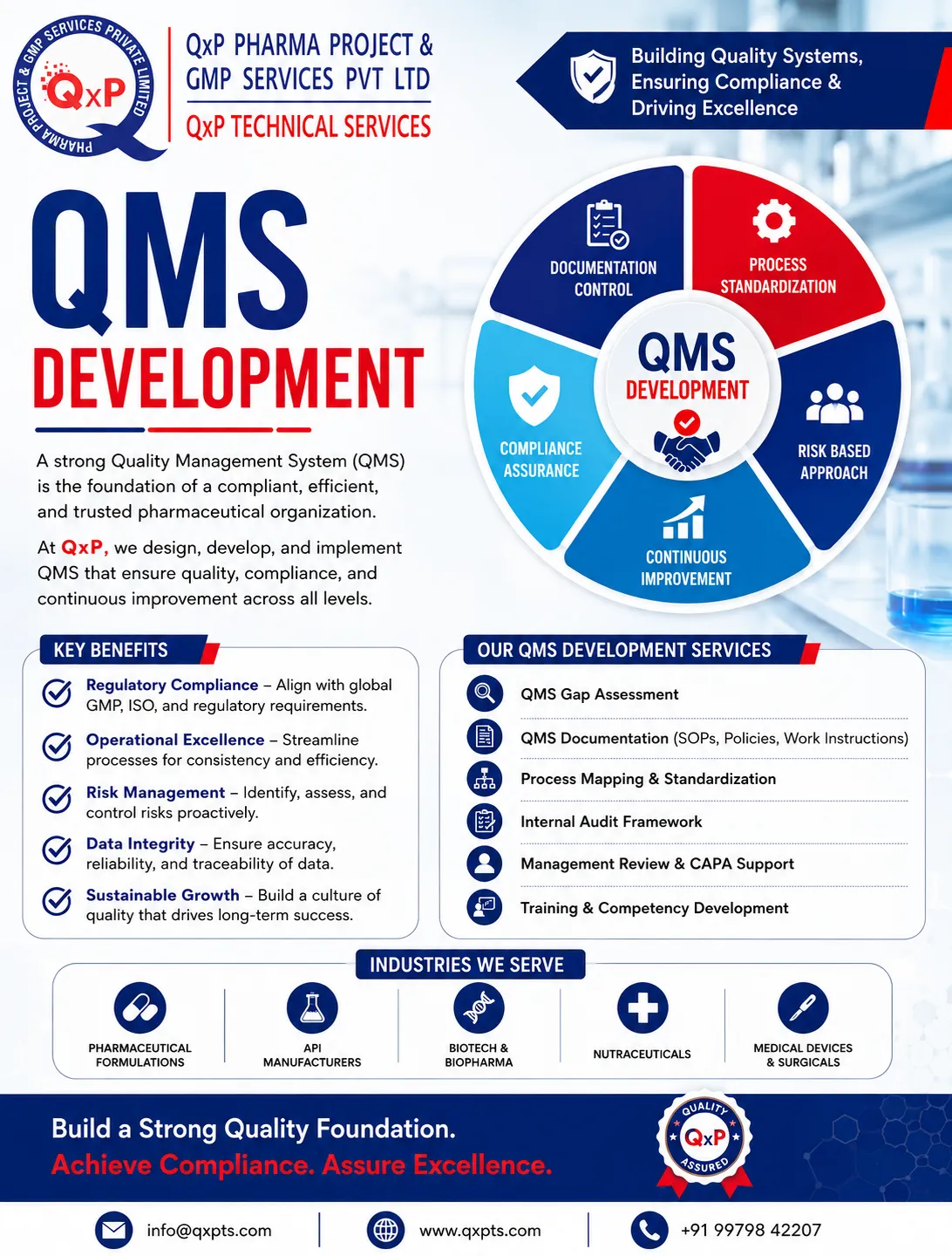
QMS reduces quality risks in pharma manufacturing by standardizing processes, controlling documentation, managing deviations, and strengthening CAPA systems. How QMS Improves Pharmaceutical Quality Systems: A Practical Guide for Indian Manufacturers explains how structured quality management supports consistent production and GMP compliance. QxP Pharma Project Consultants & GMP Services helps manufacturers identify quality gaps, improve controls, strengthen audit readiness, and establish practical QMS frameworks aligned with regulatory expectations.
How QMS Improves Pharmaceutical Quality Systems: A Practical Guide for Indian Manufacturers
Quality Management System (QMS) implementation is not a paperwork exercise — it is the backbone that decides whether your pharma plant passes a CDSCO inspection smoothly or gets stuck in endless observation cycles. Over the last 15+ years of working across Indian pharma manufacturing units, I have seen plants with excellent machinery still struggle because their QMS was weak, reactive, and disconnected from actual shop-floor practices. A well-designed QMS improves batch consistency, reduces deviations, speeds up regulatory approvals, and ultimately protects patient safety. This article breaks down, in plain practical language, how QMS strengthens pharmaceutical quality systems and what Indian manufacturers — from startups in Indore to established units in Vadodara need get right.
Why Choose QxP Pharma Project & GMP Services for QMS Implementation
QxP Pharma Project & GMP Services has been active in this space since 2018, and our approach to QMS is shaped by real plant-floor exposure rather than textbook templates. The team is led by Mr. Pankaj Sojitra, Lead Consultant with 22+ years in pharma turnkey projects, and Mr. Vijay Patel, Senior GMP & Regulatory Expert with 18+ years of hands-on regulatory experience. Together, they have guided 300+ turnkey and GMP compliance projects across India.
The best QMS consultants don’t just hand over an SOP folder — they sit with your production, QA, and warehouse teams to understand actual workflow gaps. Our processes are aligned with ISO 9001:2015, and we are an active member of the Indian Pharmaceutical Association (IPA), regularly contributing to CDSCO and WHO-GMP guideline implementation discussions. This is not theoretical knowledge — it comes from being present during actual audits, deviation investigations, and CAPA closures at client sites across Mumbai, Hyderabad, and Chandigarh.
Our QMS Consulting Capabilities
Yes, we provide end-to-end QMS design and implementation, covering document control, deviation management, CAPA systems, change control, self-inspection programs, and vendor qualification frameworks. Our capabilities are built around what actually works on Indian shop floors, not generic global templates that don’t account for local regulatory nuances like Schedule M requirements.
Key areas we work on:
- SOP architecture — building a document hierarchy that QA teams can actually maintain without drowning in revisions
- Deviation and CAPA systems — root cause analysis frameworks that hold up during CDSCO and USFDA audits
- Change control — structured evaluation before any equipment, process, or material change
- Self-inspection and internal audit programs — catching gaps before regulators do
- Training and competency matrices — because a QMS is only as good as the people executing it
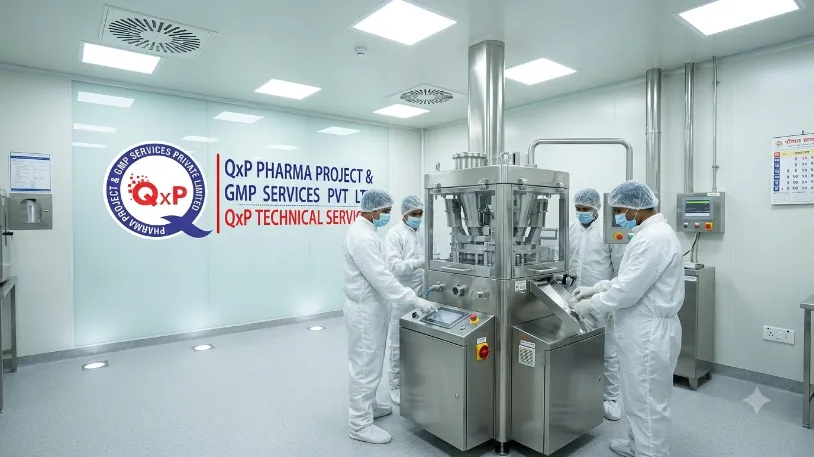
Many clients approach us with a specific need: pharma turnkey project consultant support where QMS design has to happen parallel to plant construction, not as an afterthought once the facility is ready. This integrated approach — bringing GMP plant design consultant thinking together with WHO GMP facility layout planning — saves significant rework later.
Navigating Regulatory Compliance & GMP Standards
Here’s how QxP Pharma Project & GMP Services approaches compliance: we treat CDSCO guidelines, Schedule M requirements, and WHO GMP guidelines implementation as the foundation of QMS design, not a checklist to be satisfied afterward. Schedule M compliance consultant work has become significantly more relevant since the revised Schedule M norms pushed even small and mid-sized manufacturers toward WHO-GMP-aligned documentation and infrastructure standards.
A recurring pattern we see: units in Surat or Jaipur that were compliant under older norms suddenly find themselves under-documented once inspectors start checking data integrity, environmental monitoring trends, and change control records against the revised Schedule M expectations. Schedule M compliance consultant support at this stage usually focuses on retrofitting documentation systems rather than physical infrastructure, which is often the faster and more cost-effective route.
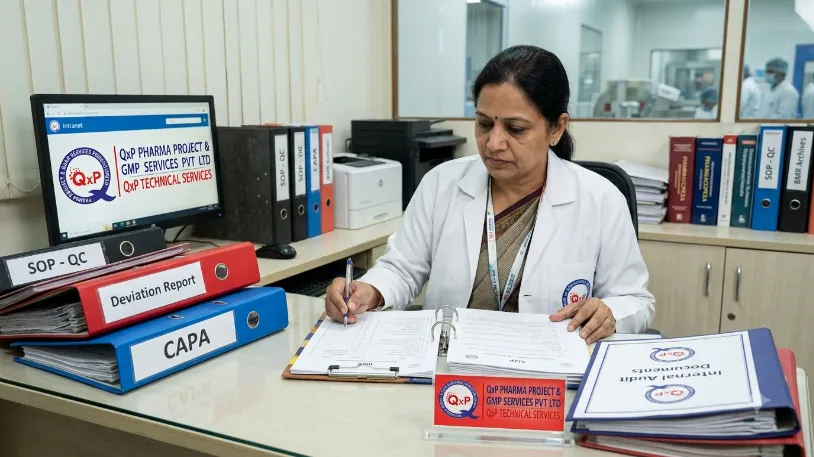
For companies planning fresh facilities, WHO GMP facility layout planning has to be baked into the QMS from day one — material flow, personnel flow, cross-contamination controls, and clean room design consultant India inputs all feed directly into how your quality systems will function operationally. A poorly planned layout creates deviations that no amount of SOP writing can fully fix.
Local Consultants vs QxP Pharma Project & GMP Services
Plant heads often ask how a specialised QMS and GMP consulting partner compares to hiring a local freelance consultant. Here’s an honest, practical comparison based on what we’ve observed across client engagements:
| Parameter | Typical Local Consultant | QxP Pharma Project & GMP Services |
|---|---|---|
| Regulatory exposure | Often limited to one or two states | CDSCO, multiple State FDAs, WHO-GMP, USFDA exposure |
| Turnkey integration | Usually QMS-only, separate from plant design | Integrated with plant layout and construction planning |
| Team depth | Individual consultant, limited backup | Dedicated team led by 20+ years combined leadership |
| Documentation approach | Generic templates | Customised to your process, product, and scale |
| Post-implementation support | Limited or one-time engagement | Ongoing audit readiness and CAPA support |
This is not to say local consultants lack value — many are genuinely skilled. But for units aiming at export markets or planning a pharma turnkey project consultant engagement from ground level, integrated support tends to reduce timeline overruns significantly.
Step-by-Step Process – How We Deliver QMS Implementation
Our delivery process is structured, but never rigid — every plant has its own quirks:
- Gap Assessment – We review existing SOPs, deviation logs, and infrastructure against current CDSCO and Schedule M expectations.
- Document Architecture Design – Building or restructuring the SOP hierarchy, forms, and records system.
- Training Rollout – Hands-on sessions with QA, production, and warehouse staff, not just management.
- Pilot Implementation – Running the new QMS on select processes before full rollout.
- Internal Audit Simulation – A mock CDSCO-style audit to identify weak points before the real inspection.
- Full Rollout & Handover – Complete system handover with ongoing support access.
Clients in Ahmedabad, Pune, and Kolkata have typically seen this full cycle completed within 8-14 weeks, depending on plant size and existing documentation maturity.
Real Client Case Study
One of our clients, a mid-sized oral solid dosage manufacturer near Vadodara (name withheld per client confidentiality), approached us after receiving multiple observations in a state FDA inspection related to deviation handling and data integrity gaps. Their existing QMS was largely paper-based, with inconsistent CAPA closure timelines.
Our team conducted a full gap assessment, restructured their deviation and CAPA workflow, and introduced a structured self-inspection calendar. Within four months, the client cleared a follow-up inspection with zero critical observations and significantly fewer major observations compared to their previous audit. This is a genuine example of how targeted QMS improvements, rather than a complete infrastructure overhaul, can resolve compliance gaps efficiently.
A quick mini success story worth mentioning too — a startup client in Indore setting up their first formulation unit used our WHO GMP facility layout planning inputs alongside QMS design from day one, which helped them avoid the retrofit costs many first-time manufacturers face later.
Whether you’re a pharma turnkey project consultant searching client in Chennai or a plant head in Chandigarh evaluating your QMS maturity, we recommend starting with a structured gap assessment before committing to a full overhaul. Download our Free GMP Gap Assessment Checklist or the Pharma Plant Setup Cost Guide to benchmark where your systems currently stand.
Frequently Asked Questions
1. What is a QMS in pharmaceutical manufacturing?
- A QMS is the structured system of policies, procedures, and records that ensures every batch is manufactured, tested, and released consistently in line with regulatory requirements like Schedule M and WHO-GMP.
2. How long does QMS implementation take for a new pharma plant?
- Typically 8-14 weeks depending on plant size, existing documentation, and whether it’s a fresh setup or a retrofit of an existing system.
3. Does QxP Pharma Project & GMP Services help with CDSCO audit preparation?
- Yes, our internal audit simulation step is specifically designed to prepare clients for CDSCO and state FDA inspections before the actual audit happens.
4. What is the typical pharma manufacturing unit setup cost in India including QMS?
- Costs vary widely by scale and product category; a proper cost breakdown is best done through a detailed consultation, which is why we offer a dedicated cost guide download.
5. Is a strong QMS mandatory for WHO-GMP certification?
- Yes, WHO-GMP guidelines implementation requires documented, functioning quality systems covering deviation handling, CAPA, and change control as core prerequisites.
6. Can an existing plant upgrade its QMS without stopping production?
- In most cases, yes — through a phased pilot implementation approach that doesn’t disrupt ongoing manufacturing operations.
For a direct conversation, contact QxP Pharma Project & GMP Services at +91 99798 42207 or +91 99798 94611, email info@qxpts.com, or message us on WhatsApp for a quick response. Don’t forget to grab your Free GMP Gap Assessment Checklist before you plan your next audit cycle.
