


Subtotal $0.00
How Does Strengthening Data Integrity Improve GMP Compliance?
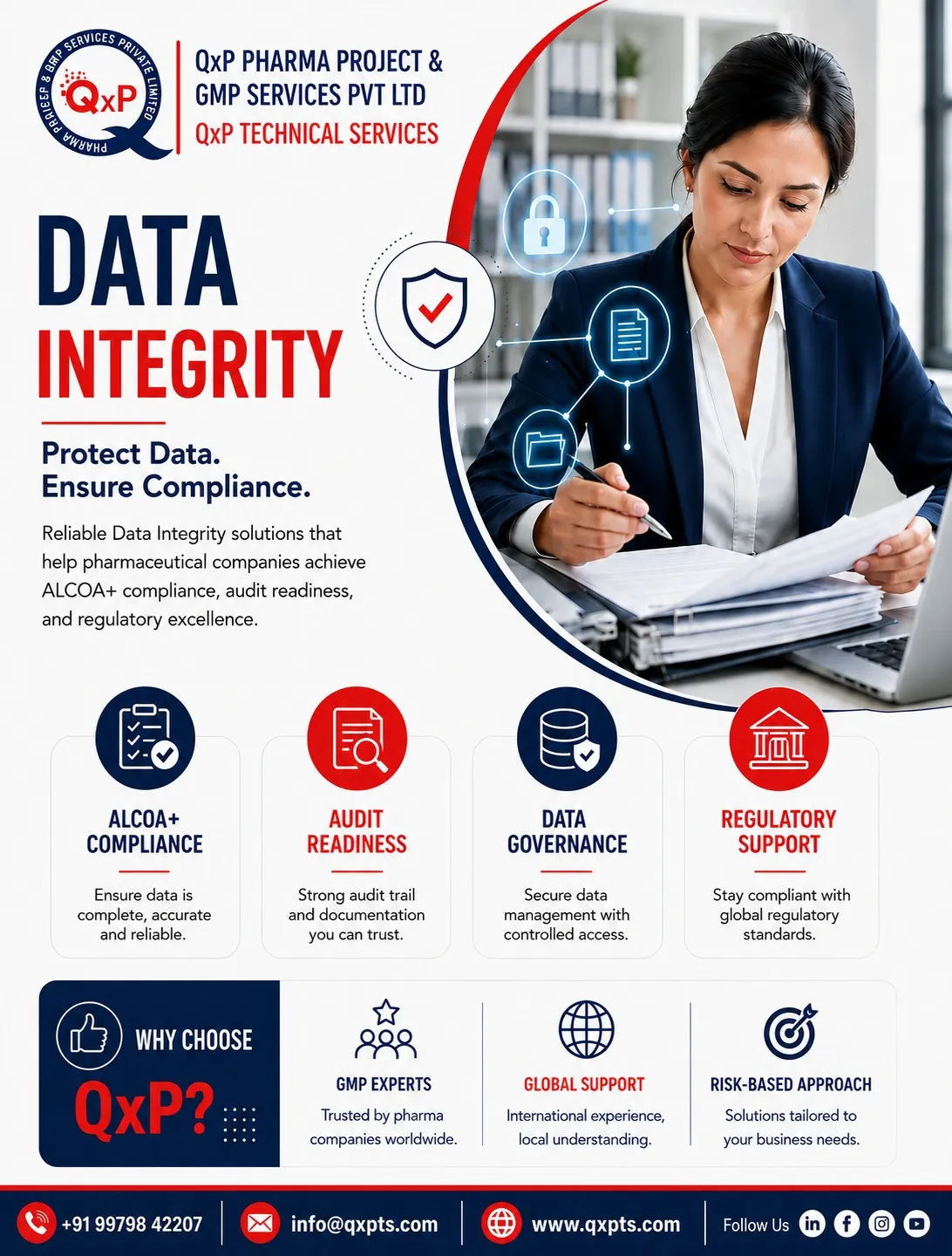
How Strengthen Data Integrity Improve GMP Compliance is a critical question for every pharmaceutical manufacturer aiming to meet global regulatory expectations. Strong data integrity ensures that records remain accurate, complete, consistent, and traceable throughout the product lifecycle, reducing compliance risks and improving audit readiness. By implementing robust documentation practices, validated computerized systems, regular employee training, and effective quality controls, companies can strengthen GMP compliance. QxP Pharma Project Consultants & GMP Services helps pharmaceutical organizations build reliable data integrity frameworks that support sustainable regulatory compliance and operational excellence.
How Strengthening Data Integrity Improves GMP Compliance
Data integrity is not a paperwork exercise. It is the backbone of every batch release decision your quality team makes.Audit trail gaps are a serious risk. So is raw data that doesn’t match reported data. And if your QC lab still runs on loose printouts and manual logbooks, your GMP compliance is built on shaky ground.
Regulators have sharpened their focus. CDSCO, Gujarat FDA, USFDA, and WHO-GMP inspectors all now scrutinise ALCOA+ principles closely. Plants that treat data integrity as an afterthought pay the price — 483 observations, warning letters, and stop-production notices.This article is practical, not theoretical.
Why Choose QxP Pharma Project & GMP Services for Data Integrity & GMP Compliance
QxP Pharma Project & GMP Services has spent years inside pharma plants — not just writing SOPs from a laptop in an office, but standing in QC labs in Vadodara and Indore watching how analysts actually enter data, where they cut corners under production pressure, and where systems genuinely fail them. Led by Mr. Pankaj Sojitra (22+ years in pharma turnkey projects) and Mr. Vijay Patel (18+ years in GMP and regulatory affairs), the team has worked across 300+ turnkey and compliance projects, which means the data integrity gaps we flag are the ones inspectors actually cite, not textbook theory. We’re an active member of the Indian Pharmaceutical Association, and our processes are aligned to ISO 9001:2015.

Yes, we provide end-to-end data integrity and GMP compliance consulting — from computer system validation (CSV) and audit trail review to staff training and Schedule M documentation upgrades. Our approach is grounded, not templated: every plant’s data flow — manual, semi-automated, or fully electronic — gets assessed on its own terms before we recommend anything.
Our Data Integrity & GMP Compliance Consulting Capabilities
Here’s how QxP Pharma Project & GMP Services typically structures a data integrity engagement:
- Data flow mapping — tracing how a value moves from instrument to raw data file to LIMS to the batch record, and finding every point where it could be altered or lost
- Audit trail configuration review on HPLC, GC, weighing systems, and environmental monitoring software
- Electronic records & signatures (21 CFR Part 11-aligned) gap assessment, even for domestic-market plants, since export ambitions almost always follow later
- SOP rewriting for data entry, second-person verification, and deviation handling
- Training programs for QC analysts and production supervisors — because most data integrity failures aren’t fraud, they’re habit and time pressure
- Backup and disaster recovery protocol design for LIMS/ERP systems
This work sits alongside our core strength in pharma turnkey project delivery — plants we design from the ground up already have data integrity built into their clean room design and equipment qualification, rather than bolted on after an inspection scare.
Navigating Regulatory Compliance & GMP Standards
The best starting point is always the current regulatory expectation, not last decade’s checklist. Schedule M (as revised) now explicitly requires documented data governance, and CDSCO inspectors are trained to ask for raw data behind any reported result, not just the final number. WHO-GMP guidelines go further, expecting a documented data integrity policy signed off by senior management — not just a QA manager’s SOP nobody else has read.
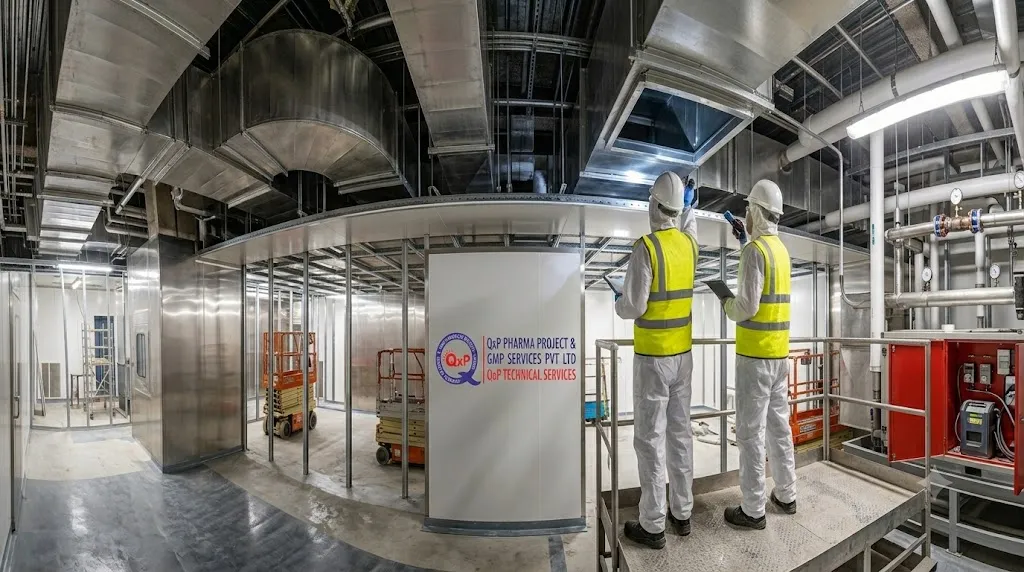
We’ve seen this play out differently across regions. A Surat-based API manufacturer we assessed had excellent equipment but zero audit trail review process — analysts were disabling timestamps without anyone noticing for months. A Chandigarh formulation unit, by contrast, had good systems but analysts were sharing login credentials, which technically defeats the entire purpose of electronic signatures. Both are data integrity failures; neither shows up unless someone is specifically looking.
CDSCO’s guidance documents and WHO’s technical report series on data integrity are both publicly available and worth reading before your next internal audit — we reference them directly when building client-specific SOPs.
Local Consultants vs QxP Pharma Project & GMP Services
| Parameter | Typical Local Consultant | QxP Pharma Project & GMP Services |
|---|---|---|
| Project Experience | Often limited to a handful of projects, single dosage form | 300+ turnkey and GMP projects across multiple dosage forms |
| Regulatory Depth | Basic Schedule M awareness | Dedicated regulatory expert (18+ years) for CDSCO, WHO-GMP, USFDA support |
| Layout & Validation Integration | Layout and validation often handled separately, causing rework | Integrated from feasibility stage to reduce design-to-compliance gaps |
| Geographic Reach | Usually limited to home city | Pan-India delivery — Ahmedabad, Mumbai, Delhi, Bangalore, Hyderabad, Surat, and more |
| Documentation Support | Limited to drawings | Full validation master plan, SOPs, qualification protocols |
Step-by-Step Process – How We Deliver Data Integrity & GMP Compliance
- Free GMP Gap Assessment — a structured walkthrough of your current data practices, documentation, and systems (this is genuinely free; we don’t gate it behind a sales call)
- Data flow and risk mapping — identifying the highest-risk data points in your process
- SOP and audit trail redesign — practical, not bureaucratic
- Staff training — hands-on sessions with QC and production teams, not slide decks nobody reads
- Mock regulatory audit — simulating a CDSCO or WHO-GMP inspection before the real one happens
- Ongoing support — because data integrity isn’t a one-time fix; it needs periodic review
This process works the same whether you’re setting up a new pharma manufacturing unit in Hyderabad or upgrading an existing facility in Kolkata. If you’re earlier in your journey and evaluating a full pharma turnkey project, our GMP plant design consultant team can build data integrity directly into your clean room design and instrumentation choices from the start.
Real Client Case Study
A mid-sized oral solid dosage manufacturer near Pune (we’ll call them “Client A” for confidentiality) came to us after a CDSCO inspection flagged inconsistent timestamps in their HPLC audit trail and missing second-person verification on critical weighing steps. Their existing SOPs looked compliant on paper but didn’t reflect what analysts actually did under production deadlines.
Our team spent three weeks mapping their actual data flow, retrained 14 QC analysts on proper audit trail practices, and rebuilt their electronic records SOP to match real working conditions rather than an idealized process. Six weeks later, Client A passed a follow-up inspection with zero data integrity observations. The mini takeaway their plant head shared with us afterward: “We didn’t need new machines. We needed our own SOPs to match reality.” That’s usually the case — most data integrity fixes are about honesty in documentation, not capital expenditure.
For deeper reading, see our related resources: GMP Compliance Consulting, Schedule M Compliance Services, Pharma Plant Validation Services, Clean Room Design Consulting, CDSCO Approval Consulting, and our blog on WHO-GMP Facility Layout Planning.
If your plant is due for a review, download our Pharma Plant Setup Cost Guide or request the Free GMP Gap Assessment Checklist — both are practical starting points before you spend money on consultants or systems.
Frequently Asked Questions
Q1. What is data integrity in GMP compliance?
- Data integrity means recorded data is complete, consistent, and accurate throughout its lifecycle — from generation to storage to reporting — following ALCOA+ principles.
Q2. How does data integrity affect GMP compliance in India?
- CDSCO and Gujarat FDA inspectors increasingly review audit trails and raw data during inspections; gaps here directly affect compliance status and can trigger 483 observations.
Q3. Is data integrity only relevant for export-focused plants?
- No. Schedule M compliance requirements apply to domestic manufacturers too, and inspection standards are converging with WHO-GMP expectations regardless of market.
Q4. What is a common data integrity mistake in Indian pharma plants?
- Shared login credentials on lab instruments and disabled audit trail timestamps are two of the most frequently cited issues we encounter.
Q5. How much does a data integrity gap assessment cost?
- Our initial GMP Gap Assessment is free; detailed remediation scope depends on plant size and existing system maturity.
Q6. Can data integrity be fixed without new equipment?
- Often yes — many fixes involve SOP redesign, training, and audit trail configuration rather than capital investment, as our Pune case study shows.
Q7. How can I get a data integrity assessment for my plant?
- You can request a Free GMP Gap Assessment Checklist or contact QxP Pharma Project & GMP Services directly via WhatsApp or phone to schedule a consultant visit.
For a confidential discussion on strengthening data integrity at your facility, reach QxP Pharma Project & GMP Services at +91 99798 42207 / +91 99798 94611, email info@qxpts.com, or message us on WhatsApp. Ask about the Free GMP Gap Assessment Checklist and our Pharma Plant Setup Cost Guide — both are useful whether you’re mid-audit-prep or just starting to think about compliance systematically.
